Making sauerkraut, kimchi, pickles, and other cultured foods at home is easier when your container holds ingredients securely below the brine and limits exposure to air. The best fermentation crock depends on batch size, cleaning preferences, available storage, and whether you want traditional stoneware or transparent glass.
We selected ten fermentation crocks and jar sets ranging from compact 1-quart-style options to large 5-gallon crocks. The comparison below highlights capacity, materials, included weights or airlocks, and the type of home fermenter each option suits best.
Best 10 Fermentation Crocks for Home Use Picks for 2026
Large-Batch Stoneware Pickling

- 7L stoneware crock for large batches
- Includes two weights and wooden tamper
- Wide waterlock and glazed interior
Best For: Large household batches of sauerkraut, kimchi, and pickled vegetables
Versatile Glass Jar Pair
1-Gallon Airlock Fermentation Jars

- Two wide-mouth 1-gallon glass jars
- Includes three airlocks and spare grommets
- Dishwasher-safe glass with measurement marks
Best For: Flexible home fermentation and separate small-to-medium batches
Beginner-Friendly Glass Set

- 3L glass jar for manageable batches
- Includes ceramic weights and silicone airlock
- Recipe and instruction booklet included
Best For: Beginners, smaller households, and fermentation gifts
Extra-Large Ceramic Capacity
10L Stoneware Fermentation Crock

- 10L capacity for very large batches
- Includes stone weights and water-seal lid
- Glazed ceramic resists odors and brine absorption
Best For: High-volume sauerkraut, kimchi, pickles, and vegetable fermenting
Best Complete Starter Kit
2L Fermentation Jars with Airlocks

- Two jars with weights, airlocks, seals, and date trackers
- Wide-mouth, clear lead-free glass design
- Dishwasher-safe jars and lids
Best For: Beginners making smaller batches of sauerkraut, pickles, or kimchi
Best for Bulk Batches
Ohio Stoneware 5-Gallon Fermentation Crock

- Large 5-gallon ceramic fermentation capacity
- Includes lid, two pressing stones, and starter recipes
- Lead-free, food-safe USA-made materials
Best For: Large household batches and preserving vegetables, fruit, or chili
Best Water-Seal Crock
7L Porcelain Fermentation Crock

- Water moat vents CO₂ while limiting oxygen entry
- Includes weights, wooden tamper, and care guide
- Opaque high-fired porcelain buffers light and temperature changes
Best For: Regular family-size batches of sauerkraut, kimchi, and pickles
Classic Stoneware Pick

- Large 3-gallon stoneware capacity
- Includes two weight stones
- Lead-free glaze simplifies cleanup
Best For: Large batches of sauerkraut and pickles
Sealed Fermentation Value
1-Gallon Black Stoneware Crock
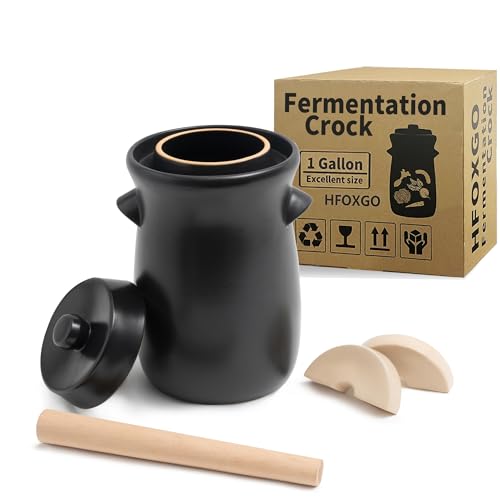
- Water-seal lid supports anaerobic fermentation
- Includes weights, lid, and pickle tamper
- Glazed ceramic is lead- and cadmium-free
Best For: Moderate batches of sauerkraut, kimchi, and pickles
Beginner-Friendly Set

- Includes pounder, weights, recipes, and guide
- Food-grade lead-free double-glazed ceramic
- Large handles and water-seal lid
Best For: Beginners starting sauerkraut, kimchi, or pickling
Large-Batch Stoneware Pickling – TOMO 7L Fermentation Crock
For shoppers comparing fermentation crocks for home use, the TOMO 7L crock is a substantial stoneware option for making sauerkraut, kimchi, pickled vegetables, or kombucha in larger batches. Its waterlock design helps maintain an oxygen-free environment, while the glazed interior is designed for easier cleaning.
Best For: Home fermenters who want a durable, large-capacity ceramic crock for batch preparation.
Pros:
- 7L capacity can handle approximately 5–7 cabbages and about 12 mason jars of sauerkraut.
- Includes two ceramic weights and a wooden tamper.
- Wide waterlock helps gases escape while keeping outside air out.
- Fully glazed, non-porous interior helps resist odors and simplifies cleaning.
Cons:
- At over 10 pounds, it is considerably heavier than a glass jar setup.
- The large capacity may be excessive for small households or occasional batches.
The TOMO is a strong choice when capacity and traditional ceramic construction matter most. Its included accessories and wide waterlock make it a ready-to-use option, though its size and weight call for dedicated counter or storage space.
Versatile Glass Jar Pair – 1-Gallon Airlock Fermentation Jars
Among fermentation crocks for home use, this two-pack of 1-gallon glass jars suits shoppers who prefer transparent containers and flexible batch sizes. The wide mouths make loading easier, while airlock lids, gaskets, and spare components support fermentation of sauerkraut, pickles, kombucha, and other foods.
Best For: Home cooks who want two reusable, dishwasher-safe glass fermentation containers with airlocks.
Pros:
- Two 1-gallon jars provide room for separate batches or recipes.
- 4.3-inch wide mouths make filling and removing contents easier.
- Includes three airlocks, silicone grommets, labels, and a pen.
- Thick food-grade glass has measurement marks and is dishwasher safe.
Cons:
- Glass requires care around impacts and sudden temperature changes.
- The plastic screw-on lids may feel less traditional than ceramic crock lids.
This set is a practical alternative to a single ceramic crock for shoppers who value visibility, portion flexibility, and easy cleaning. The included spare airlock and grommets add useful backup for regular fermenting.
Beginner-Friendly Glass Set – Kilner 3L Fermentation Set
The Kilner 3L set is a straightforward choice for anyone researching fermentation crocks for home use and wanting the key components in one package. It combines a glass fermenting jar, silicone airlock lid, ceramic weights, and an instruction and recipe booklet for making sauerkraut, kimchi, and pickles.
Best For: Beginners and gift shoppers seeking a complete, compact fermentation starter set.
Pros:
- Complete set includes a 3L jar, silicone airlock lid, and ceramic weights.
- Vented lid releases gases while helping prevent air entry.
- Glass is BPA-free and dishwasher safe.
- Instruction and recipe booklet supports first-time use.
Cons:
- 3L capacity is smaller than the large ceramic crocks in this roundup.
- It is intended for food fermentation rather than a broad range of uses.
With its manageable capacity and included guidance, the Kilner is an approachable entry point for home fermentation. It is especially convenient when you want a recognizable glass jar format without assembling accessories separately.
Extra-Large Ceramic Capacity – 10L Stoneware Fermentation Crock
For serious batch makers comparing fermentation crocks for home use, this 10L stoneware fermenter offers the largest stated capacity in the group. Its water-seal lid, ceramic weights, and glazed food-grade construction are designed for sauerkraut, kimchi, pickles, vegetables, and kombucha.
Best For: Experienced fermenters preparing very large vegetable batches or preserving produce in quantity.
Pros:
- 10L capacity can accommodate approximately 6–9 cabbages and about 13 mason jars of sauerkraut.
- Includes stone weights and a lid for keeping produce submerged.
- Water seal allows gases to escape while helping block outside air.
- Lead- and cadmium-free glazed ceramic is designed to resist odors, tastes, and brine absorption.
Cons:
- At 18.4 pounds before filling, it is difficult to move once loaded.
- Its extra-large footprint may not suit smaller kitchens.
- Large capacity can be impractical for occasional or low-volume fermenting.
This crock is built around maximum capacity and long-term ceramic use rather than portability. It makes the most sense for households that regularly ferment large quantities and have stable space for a heavy vessel.
Best Complete Starter Kit – 2L Fermentation Jars with Airlocks
For shoppers comparing fermentation crocks for home use, this two-jar kit offers a convenient glass alternative for smaller batches. It includes fermentation weights, airlocks, seals, and date-marking lids, making it practical for trying multiple recipes or timelines.
Best For: Beginners and households making sauerkraut, pickles, kimchi, and other small-batch ferments.
Pros:
- Complete two-jar kit includes weights, airlocks, seals, and date trackers.
- Wide 86 mm mouth simplifies filling, emptying, and hand cleaning.
- Clear, lead-free glass and dishwasher-safe jars and lids make contents easy to monitor and cleanup convenient.
- Silicone seals and grommets are designed to limit oxygen exposure.
Cons:
- The 64-ounce/2-liter capacity is better suited to smaller batches than bulk fermentation.
- Glass can be less protective from light and temperature changes than opaque ceramic.
This is a flexible choice when you want a ready-to-use fermentation setup without committing to a large crock. The two-jar format is especially useful for staggered batches, while the included airlocks and weights reduce the need to buy accessories separately.
Best for Bulk Batches – Ohio Stoneware 5-Gallon Fermentation Crock
Ohio Stoneware 5 Gallon Fermentation & Preservation Crock - Crock, Lid, Stones
Check Price On AmazonAmong fermentation crocks for home use, this 5-gallon Ohio Stoneware model is built for substantial quantities. Its ceramic crock comes with a full-width lid, two pressing stones, and starter recipes, making it a traditional option for fermenting and preserving larger batches.
Best For: Experienced home fermenters and families preparing large batches of vegetables, fruit, or chili.
Pros:
- Large 5-gallon capacity supports bulk fermentation and preservation.
- Includes the crock, full-width lid, two pressing stones, and starter recipes.
- Made in the USA with lead-free, food-safe materials and glazes.
- Listed as dishwasher-, microwave-, refrigerator-, and conventional-oven-safe.
Cons:
- At roughly 43 pounds for the crock, lid, and stones, it is heavy and less portable.
- The sealed-lid design has no water channel, so it differs from water-seal crock designs.
- The 5-gallon size may be excessive for occasional or small-batch users.
This crock makes the most sense when capacity is the priority. Its included pressing stones and full-width lid provide the core components for larger projects, but the substantial weight and footprint call for a dedicated, stable storage and fermentation area.
Best Water-Seal Crock – 7L Porcelain Fermentation Crock
For those seeking fermentation crocks for home use with a traditional water seal, this 7-liter porcelain crock is designed for regular family-size batches. Its water moat allows carbon dioxide to escape while helping keep oxygen and contaminants out, and the opaque ceramic helps buffer light and temperature changes.
Best For: Home fermenters who want a countertop crock for recurring sauerkraut, kimchi, and pickle batches.
Pros:
- 7-liter/1.8-gallon capacity can hold substantial family-size batches.
- Water-seal design supports an anaerobic environment while allowing CO₂ to escape.
- Includes two ceramic weights, a wooden tamper, and a printed care and use guide.
- High-fired porcelain is non-toxic, non-porous, and designed to resist cracking and temperature fluctuations.
Cons:
- Hand-wash-only care requires more cleanup effort than dishwasher-safe options.
- Its capacity is smaller than a 5-gallon bulk crock.
- The substantial ceramic construction is intended to remain in a dedicated spot rather than move frequently.
This model balances meaningful batch capacity with a countertop-friendly design and a water-seal system. It is a strong fit for users who want the light-blocking and temperature-buffering benefits of opaque ceramic, along with included tools for getting started.
Classic Stoneware Pick – 3-Gallon Ohio Stoneware Crock
Ohio Stoneware 3 Gallon Fermentation/Preserving Crock Set - Great for Pickling and Sauerkraut
Check Price On AmazonFor shoppers comparing fermentation crocks for home use, this Ohio Stoneware set offers a generous 3-gallon capacity in natural stoneware with a traditional blue-striped finish. Its lead-free glaze is designed not to retain food flavors and helps simplify cleanup.
Best For: Larger batches of sauerkraut, pickles, and other preserved foods.
Pros:
- Generous 3-gallon capacity for batch fermenting and preserving
- Includes two fermentation weight stones
- Lead-free glazed stoneware resists retained flavors and is easier to clean
- Rounded handles make the crock easier to maneuver
Cons:
- At about 25 pounds, it is substantially heavier than smaller crocks
- Its large footprint may require dedicated storage space
This is a practical choice when capacity matters more than portability. The classic stoneware construction and included weights make it well suited to regular, larger-scale preserving projects.
Sealed Fermentation Value – 1-Gallon Black Stoneware Crock
This 1-gallon crock is a versatile option among fermentation crocks for home use, with a glazed ceramic body, stone weights, lid, and pickle tamper. Its water-seal design is intended to let gases escape while limiting outside air, supporting anaerobic fermentation.
Best For: Home fermenters making sauerkraut, kimchi, pickled vegetables, or kombucha in moderate batches.
Pros:
- Water-seal lid helps gases escape while keeping outside air out
- Includes stone weights, lid, and pickle tamper
- Food-grade, lead- and cadmium-free glazed ceramic is non-porous and easier to wash
- 1-gallon size can accommodate roughly 2–5 cabbages, according to the supplied product details
Cons:
- Smaller capacity than a 3-gallon crock for large preserving projects
- The supplied care details do not specify whether the crock is dishwasher safe
With its included accessories and sealed-lid design, this crock offers a straightforward setup for experimenting with several types of fermented foods. The 1-gallon format is more manageable for routine home batches.
Beginner-Friendly Set – HomeBuddy 1-Gallon Crock
For those new to fermentation crocks for home use, the HomeBuddy 1-gallon ceramic crock bundles the main equipment with ceramic weights, an acacia wood pounder, a recipe book, and a user guide. Its water-seal lid and large handles are designed for practical everyday use.
Best For: Beginners who want a complete kit for sauerkraut, kimchi, pickling, or kombucha.
Pros:
- Includes ceramic weights, an acacia wood pounder, recipes, and a user guide
- Food-grade, lead-free, double-glazed ceramic is designed not to absorb unwanted smells or tastes
- Water-seal design allows gases to escape while limiting outside air
- Large handles support lifting and maneuvering
Cons:
- Hand wash only, according to the supplied care instructions
- 1-gallon capacity is intended for smaller batches than larger preserving crocks
The included pounder and instructional materials make this one of the more approachable options for starting a fermentation routine. It is a sensible fit for home cooks who value a coordinated kit and easy handling.
How We Picked the Best Fermentation Crocks for Home Use
We compared these products by looking at the features that most affect successful home fermentation: usable capacity, food-contact materials, lid and seal design, included fermentation weights, airlock availability, ease of cleaning, and overall practicality. We also considered whether each vessel is better suited to small experimental batches, regular family-size production, or bulk preserving.
Traditional stoneware crocks can block light and provide a stable environment for larger batches, while glass jars make it easy to monitor brine, bubbles, and mold growth. Included weights and water-seal lids can reduce the need to purchase accessories separately.
Quick Comparison
- Small-batch glass jars: Best for testing recipes, fermenting several flavors, and fitting standard refrigerators.
- One-gallon crocks: A useful middle ground for regular sauerkraut, pickles, and kimchi batches.
- 7- to 10-liter crocks: Better for frequent fermenters who need more capacity without moving to commercial-size equipment.
- 3- to 5-gallon crocks: Designed for bulk batches, preserving harvests, or households that ferment regularly.
Key Buying Factors for Fermentation Crocks for Home Use
Capacity and Batch Size
Choose based on the amount you will realistically ferment, not simply the largest capacity available. A vessel should leave room for the vegetables, brine, weights, and some headspace. Smaller jars are easier to refrigerate, whereas large crocks are more efficient for garden harvests but require more storage space and ingredients.
Material and Visibility
Glazed stoneware is durable, opaque, and traditional, but you cannot see the ferment without opening the lid. Glass lets you inspect the brine and ingredients at a glance. Whichever material you choose, confirm that the interior is food-safe and free from chips, cracks, or damage before use.
Weights, Lids, and Airlocks
Fermentation weights help keep food submerged, which is central to limiting unwanted surface growth. Water-seal lids and airlocks allow gases to escape while reducing outside-air exposure. If a model lacks these parts, check the cost and availability of compatible accessories before buying.
Cleaning and Storage
Look for smooth surfaces and removable parts that can be washed thoroughly. Ceramic crocks are heavy and may be awkward to move when full; glass jars are lighter in smaller sizes but can break if mishandled. Always follow the manufacturer’s care instructions and avoid sudden temperature changes with ceramic vessels.
Who Should Buy Which Fermentation Crocks for Home Use?
Beginners and occasional fermenters should start with a small glass jar set or compact one-gallon crock. These options limit waste and make it easier to learn salt ratios, packing, and brine management.
Regular home fermenters will likely prefer a 7-liter, 10-liter, or one-gallon stoneware crock with included weights. These sizes offer useful capacity without the handling challenges of very large vessels.
Large households and gardeners should consider the 3- or 5-gallon Ohio Stoneware options. They are most practical when you routinely process large quantities and have a cool, stable place to store a filled crock.