Dehydrating your own meals can reduce pack weight, control ingredients, and make backpacking food more enjoyable. The right machine should dry evenly without taking up unnecessary counter or storage space.
We compared these 10 dehydrators by tray design, temperature range, capacity, controls, and practical versatility for preparing fruit, jerky, vegetables, herbs, and lightweight trail meals.
Best 10 Food Dehydrator for Backpacking Picks for 2026
Best Adjustable Temperature Pick

- 95–165°F control in 1°F increments
- Five BPA-free trays, expandable to seven
- 48-hour timer and quiet operation
Best For: Precise backpacking meal prep and small-batch drying
Best Lightweight Compact Pick

- Lightweight 3.9-pound compact design
- Five adjustable BPA-free trays
- Up to 72 hours with 95–158°F control
Best For: Small-batch preparation in apartments, RVs, and compact kitchens
Best High-Capacity Pick
Magic Mill Pro Stainless Dehydrator

- Seven full-size stainless steel trays
- 600W rear-fan even-drying system
- 95–176°F control and 48-hour timer
Best For: Frequent, large-batch backpacking meal preparation
Best Simple Storage Pick
Commercial Chef 5-Tray Dehydrator

- Lightweight 3.3-pound compact design
- Five BPA-free trays
- 104–158°F adjustable thermostat
Best For: Occasional, basic backpacking food preparation
Lightweight Batch Prep
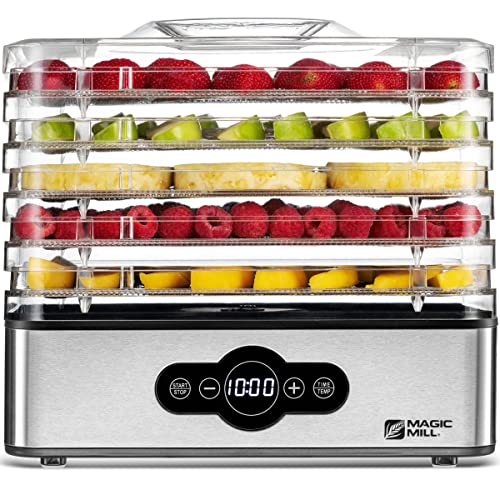
- 2.75 kg design is relatively easy to handle
- Five adjustable stainless steel trays
- 95–167°F control with 48-hour timer
Best For: Pre-trip backpacking meal prep when lower weight matters
Precision Jerky Prep
Cosori 5-Tray Stainless Steel Dehydrator
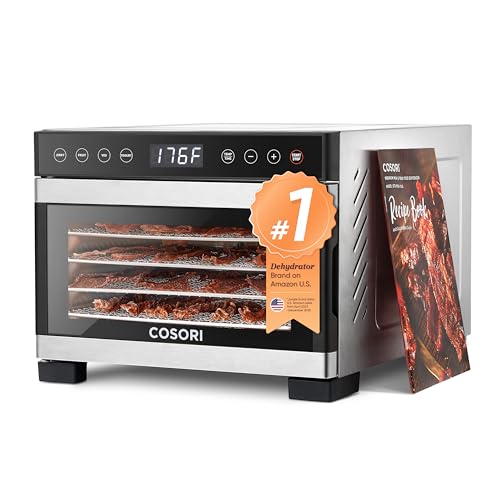
- 95–176°F range with 1°F adjustments
- 3.1 ft² of drying space
- Includes mesh screen and fruit roll sheet
Best For: Precise home preparation of jerky and trail snacks
High-Power Family Batches
Rosewill Compact Food Dehydrator

- 400W system with 360° hot-air circulation
- Five trays with adjustable spacing
- 0.5–48-hour timer and automatic shutoff
Best For: Large pre-trip batches with varied ingredient thicknesses
Best Compact Starter
Elite Gourmet Stainless Steel Tray Dehydrator

- Four removable transparent trays
- 95°F–158°F controls with 24-hour timer
- 350W indoor design for small batches
Best For: Backpackers preparing small batches of snacks at home
Best Lightweight Batch Option

- Five BPA-free drying trays
- 1–24-hour timer and adjustable temperature
- Nesting trays and built-in cord storage
Best For: Backpackers needing medium batches with compact storage
Best Simple Pick
CROWNFUL Seven-Tray Dehydrator
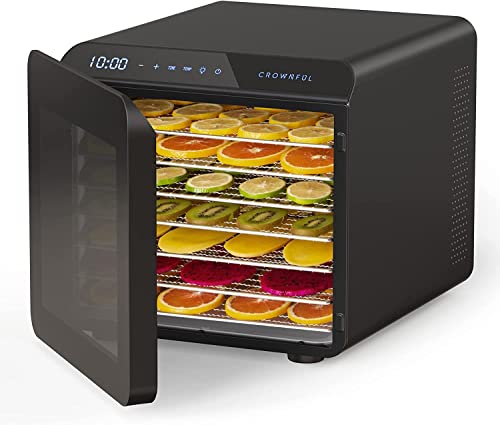
- Seven stainless steel trays
- 85°F–165°F range with 24-hour timer
- 600W rear-fan circulation and safety shutoff
Best For: Frequent backpackers preparing large snack batches
Best Adjustable Temperature Pick – Cosori 5-Tray Food Dehydrator
If you need a food dehydrator for backpacking meal prep or compact home use, the Cosori offers five BPA-free trays, a 350W motor, and precise temperature control. Its 4.9-pound weight is manageable for occasional transport, while the 48-hour timer supports longer drying sessions.
Best For: Backpackers and home users who want precise controls, expandable capacity, and relatively quiet operation.
Pros:
- Adjustable from 95–165°F in 1°F increments.
- Five BPA-free trays can expand to seven with additional trays.
- Runs for up to 48 hours and operates below 47 dB.
- Adjustable tray heights accommodate thicker ingredients.
Cons:
- Its 12.2-inch round footprint may be bulky for very limited packing space.
- Additional trays and sheets are sold separately.
The Cosori is a flexible choice when temperature precision and expandable drying space matter more than minimizing pack size. Its white plastic construction and moderate weight make it practical for kitchen-based backpacking food preparation.
Best Lightweight Compact Pick – Small 5-Tray Food Dehydrator
For shoppers seeking a food dehydrator for backpacking preparation in a small kitchen, dorm, RV, or apartment, this compact model emphasizes low weight and simple operation. It weighs 3.9 pounds, uses 250W, and includes five height-adjustable transparent trays.
Best For: Beginners and backpackers making small batches while prioritizing compact storage and lower energy use.
Pros:
- Lightweight 3.9-pound design with a compact footprint.
- Five BPA-free trays have adjustable height settings.
- Temperature adjusts from 95–158°F with up to 72 hours of operation.
- Dishwasher-safe trays simplify cleanup when washed below 158°F.
Cons:
- Its small-batch design offers less capacity than full-size models.
- The temperature range tops out at 158°F.
This is a practical entry-level option for dehydrating fruit, vegetables, herbs, or jerky before a trip. The combination of low weight, transparent trays, and a long operating time suits users who value convenience over maximum batch capacity.
Best High-Capacity Pick – Magic Mill Pro Stainless Dehydrator
When preparing large quantities of trail food, this Magic Mill Pro provides seven full-size stainless steel trays and a 600W rear-fan drying system. It is a substantial countertop appliance, but its even-drying design and broad temperature range make it suited to serious backpacking meal preparation.
Best For: Frequent backpackers and large-batch users who want stainless steel construction and extensive capacity.
Pros:
- Seven full-size stainless steel trays with a stainless interior and exterior.
- Rear-mounted fan and heat system are designed for even drying without tray rotation.
- Precise 95–176°F control and a 48-hour timer with auto shutoff.
- Includes mesh screens, a fruit roll/drip tray, keep-warm mode, and overheat protection.
Cons:
- At 7.26 kg, it is considerably heavier than the compact options.
- Its larger 15.5-inch-deep footprint is less convenient for limited storage or transport.
- The 600W system may use more power than smaller models.
The Magic Mill Pro is best viewed as a home-base dehydrator for producing multiple days of backpacking meals at once. Its capacity and stainless construction are compelling for frequent use, but its weight makes it unsuitable for carrying on the trail.
Best Simple Storage Pick – Commercial Chef 5-Tray Dehydrator
The Commercial Chef is a straightforward food dehydrator for backpacking prep, offering five BPA-free trays in a compact, 3.3-pound design. Its adjustable 104–158°F thermostat and 280W power rating cover common uses such as fruit, vegetables, herbs, and jerky.
Best For: Budget-conscious users who want a lightweight, easy-to-store dehydrator for basic trail-food preparation.
Pros:
- Lightweight 3.3-pound body is easy to move and store.
- Five BPA-free trays provide room for small batches.
- Compact dimensions fit in a pantry or cupboard.
- Adjustable thermostat supports drying meats, fruit, vegetables, and herbs.
Cons:
- Temperature control begins at 104°F, offering less low-temperature flexibility.
- The trays require hand washing.
- Product details do not specify a timer duration.
This Commercial Chef model keeps the feature set simple and the storage burden low. It makes sense for occasional backpacking prep when portability and basic dehydration matter more than digital controls or premium materials.
Lightweight Batch Prep – Magic Mill 5-Tray Dehydrator
For a food dehydrator for backpacking meal prep, the Magic Mill offers a relatively lightweight 2.75 kg design, five stackable stainless steel trays, and straightforward digital controls. Its 240-watt system supports temperatures from 95°F to 167°F and a timer of up to 48 hours.
Best For: Backpackers who want to prepare fruit, vegetables, jerky, or pet treats in batches before a trip while keeping the appliance relatively easy to handle.
Pros:
- Light 2.75 kg body compared with the other listed models
- Five adjustable stainless steel trays accommodate different food thicknesses
- Digital temperature and timer controls are simple to set
- Detachable trays are dishwasher-safe according to the supplied notes
Cons:
- Its 167°F maximum temperature is lower than the Cosori’s 176°F setting
- The compact tray area may require smaller batches for larger meal-prep loads
The Magic Mill is a practical choice when portability and uncomplicated operation matter most. Its lighter weight makes it the most backpacking-friendly option of these three for home preparation, though the limited five-tray capacity may not suit very large batches.
Precision Jerky Prep – Cosori 5-Tray Stainless Steel Dehydrator
The Cosori is a strong food dehydrator for backpacking meal preparation when precise temperature control and even drying are priorities. It provides five stainless steel trays, 3.1 square feet of drying space, horizontal airflow, and settings from 95°F to 176°F in 1-degree increments.
Best For: Backpackers preparing jerky, fruit, vegetables, or compact trail snacks who value precise controls and included accessories.
Pros:
- Precise 1°F temperature adjustments from 95°F to 176°F
- Horizontal airflow and a rear fan support even dehydration
- Includes a mesh screen, fruit roll sheet, recipe book, and five trays
- Four presets cover jerky, fruit, vegetables, and yogurt
Cons:
- At 10.8 pounds, it is substantially heavier than the Magic Mill
- Its 480-watt rating may use more power during operation
- Larger dimensions may make storage less convenient
The Cosori is the most feature-rich option here for controlled batch preparation. Its precise settings and accessories are useful for varied trail foods, but its higher weight makes it better suited to a home kitchen or base-camp setup than carrying into the backcountry.
High-Power Family Batches – Rosewill Compact Food Dehydrator
The Rosewill is a food dehydrator for backpacking trips that calls for larger pre-trip batches of dried food. Its 400-watt heating system, 360-degree hot-air circulation, five adjustable trays, and timer settings from 0.5 to 48 hours support jerky, fruit, herbs, vegetables, and other trail ingredients.
Best For: Backpackers or households preparing substantial quantities of trail food at once, especially when adjustable tray spacing is useful.
Pros:
- 400-watt system and 360-degree air circulation support efficient drying
- Five trays can be adjusted from 0.8 to 1.5 inches for thicker ingredients
- Automatic shutoff, LED controls, and quiet operation add convenience
- Compact exterior dimensions provide useful drying capacity
Cons:
- The listed item weight is 14.7 pounds, making it the heaviest option
- Temperature details conflict in the supplied notes: the feature description lists 95–158°F, while the specifications list up to 195°F
- Only a one-year warranty is listed
The Rosewill suits high-volume preparation more than lightweight transport. Its adjustable spacing and stronger wattage are attractive for preparing varied foods, but the unusually high listed weight and inconsistent temperature information are worth verifying before purchase.
Best Compact Starter – Elite Gourmet Stainless Steel Tray Dehydrator
If you want a straightforward food dehydrator for backpacking snack prep, the Elite Gourmet EFD308 offers four removable trays, adjustable temperature control, and a compact rectangular footprint. Its 350-watt design is intended for home use, so dehydrate fruit, vegetables, herbs, or jerky before your trip rather than outdoors.
Best For: Backpackers preparing small batches of homemade trail snacks at home.
Pros:
- Four transparent, dishwasher-safe removable trays make loading and cleanup simple.
- Adjustable temperature from 95°F to 158°F and a timer of up to 24 hours support different foods.
- Bottom-mounted airflow promotes even drying while the transparent trays let you monitor progress.
Cons:
- Four trays provide less capacity than the larger seven-tray model.
- The supplied specifications identify it for indoor home use, not outdoor operation.
This is a practical choice for occasional or small-batch backpacking preparation, especially if easy monitoring and dishwasher-safe parts matter more than maximum capacity.
Best Lightweight Batch Option – NESCO FD-5TC Snackmaster
The NESCO FD-5TC is a useful food dehydrator for backpacking meal preparation when you want a little more capacity without moving to a full-size unit. Five BPA-free trays, adjustable temperature settings, and a digital 1–24-hour timer make it suitable for preparing jerky, dried fruit, herbs, and other trail foods at home.
Best For: Backpackers who need medium-sized batches and compact storage between uses.
Pros:
- Five 12-by-9.5-inch BPA-free trays handle small to medium batches.
- Adjustable temperature control and a 1–24-hour digital timer offer flexible drying.
- Trays nest into a compact storage position, and built-in cord storage helps keep the unit tidy.
- The 5-pound construction is comparatively manageable for a countertop dehydrator.
Cons:
- It is a 120-volt countertop appliance, so it is intended for preparation at home rather than on the trail.
- Plastic construction may be less durable than a stainless steel housing.
With five trays and space-saving nesting, the FD-5TC balances batch size and storage convenience well for hikers who regularly prepare homemade snacks before leaving.
Best Simple Pick – CROWNFUL Seven-Tray Dehydrator
For preparing substantial quantities of trail food, the CROWNFUL seven-tray unit is a high-capacity food dehydrator for backpacking prep. Its stainless steel trays, 600-watt power, rear-mounted fan, and 85–165°F temperature range support larger batches of jerky, fruit, meat, herbs, and other dehydrated foods.
Best For: Frequent backpackers or households preparing large quantities of varied trail snacks in advance.
Pros:
- Seven stainless steel trays provide the largest stated capacity in this group.
- Digital controls offer temperatures from 85°F to 165°F and a timer up to 24 hours.
- Rear-mounted airflow and 360-degree hot-air circulation are designed for uniform drying.
- Auto-shutoff, overheat protection, interior lights, and a stated noise level of 48 dB or less add convenience.
Cons:
- At about 15.94 inches deep, 13.39 inches wide, and 12.2 inches high, it requires more storage space.
- Its approximately 7.64-kilogram weight makes it less convenient to move than the smaller models.
- The 600-watt unit may be more capacity than occasional snack makers need.
The CROWNFUL is the strongest fit when batch size is the priority. Its larger footprint and weight are trade-offs, but the seven stainless steel trays make it well suited to serious pre-trip food preparation.
How We Picked the Best Food Dehydrator for Backpacking
For this roundup, we focused on features that matter before, during, and after a backpacking trip. We compared usable drying space, tray materials, temperature adjustment, timer functionality, airflow design, footprint, and cleaning convenience. We also considered whether each model can handle multiple food types, from fruit leather and vegetables to jerky and complete cooked meals.
A dehydrator does not go in most backpacking packs, so portability means more than low shipping weight. Compact storage, stackable trays, manageable power needs, and dependable batch capacity can make a larger home dehydrator the better choice for preparing food before a trip.
Quick Comparison
- Best for balanced everyday use: A five-tray model with adjustable temperature and straightforward controls.
- Best for larger batches: A seven-tray dehydrator with rear-fan airflow and expanded drying space.
- Best for compact kitchens: A smaller five-tray unit with a narrow footprint and simple operation.
- Best for stainless-steel durability: Models using stainless-steel trays, especially for frequent meal preparation.
- Best for occasional snack making: An affordable unit with basic temperature control and easy-clean trays.
Key Buying Factors for a Food Dehydrator for Backpacking
Capacity and Tray Layout
Choose capacity based on how many meals you prepare at once. Five trays suit most individuals and couples, while seven trays are useful for group trips or large batches. Stackable designs are usually easier to store, but full-size trays can make arranging ingredients faster.
Temperature Range and Airflow
Adjustable temperature control is important because herbs, fruit, vegetables, and meat require different settings. A rear-mounted fan generally promotes more consistent airflow than a basic bottom-heating design, reducing the need to rotate trays during long drying sessions.
Timers and Overnight Operation
A long timer helps when foods need many hours to finish. Automatic shutoff is especially useful if you start a batch in the evening or while preparing other trip supplies. If a model lacks a timer, plan to monitor it more closely.
Materials, Cleaning, and Power
Stainless-steel trays are durable and resist staining, while BPA-free plastic trays are often lighter and more affordable. Check whether trays are dishwasher-safe or easy to rinse. Wattage affects energy use and drying performance, but it should be considered alongside airflow and usable capacity rather than by itself.
Who Should Buy Which Food Dehydrator for Backpacking?
Choose a compact five-tray model if you have limited storage or usually prepare food for one or two hikers. Choose a seven-tray model if you batch-cook meals, make jerky regularly, or prepare food for a group. Choose stainless-steel trays for frequent use and long-term durability, while BPA-free plastic trays can be a practical value choice for occasional dehydration.
For most backpackers, the best overall fit is a dehydrator with adjustable temperature, a timer, even airflow, and enough tray space to finish a trip’s food in a few batches. Prioritize the features you will use repeatedly rather than choosing solely by wattage or maximum tray count.