The best espresso machines for office kitchens can turn a shared break room into a reliable coffee station, but the right choice depends on workflow, drink preferences, cleanup expectations, and available counter space.
This roundup compares 10 capable machines across manual, semi-automatic, and automated designs, helping you match features such as milk steaming, beverage variety, water capacity, and ease of use to your office’s daily routine.
Best 10 Espresso Machines for Office Kitchens Picks for 2026
Hands-On Office Favorite

- Built-in conical burr grinder
- PID-controlled espresso extraction
- Manual microfoam steam wand
Best For: Small teams that prefer hands-on espresso preparation
Most Versatile Office Brewer

- Espresso, drip, cold brew, and hot water
- Guided grind and weight-based dosing
- Hot and cold frothing options
Best For: Mixed-preference offices needing one versatile brewer
Best Guided Espresso Experience

- Touchscreen guided drink preparation
- Eight customizable coffee settings
- Automatic milk texturing and fast heat-up
Best For: Offices wanting easy, repeatable café-style drinks
Best Simple All-Rounder
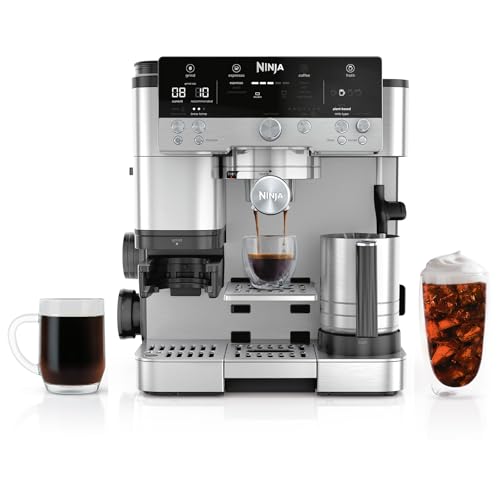
- Three-in-one espresso and coffee brewing
- Assisted dosing and tamping
- Automatic hot and cold frothing
Best For: Offices wanting approachable espresso plus regular coffee
Best for Hands-On Office Baristas
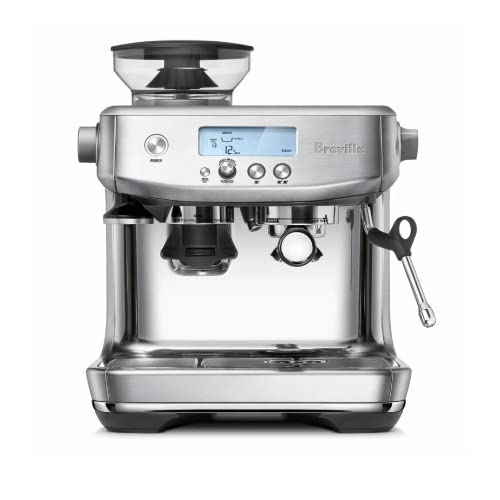
- Integrated conical burr grinder
- Three-second ThermoJet heat-up
- Manual microfoam steam wand
Best For: Offices wanting customizable bean-to-cup drinks
Best for Push-Button Variety
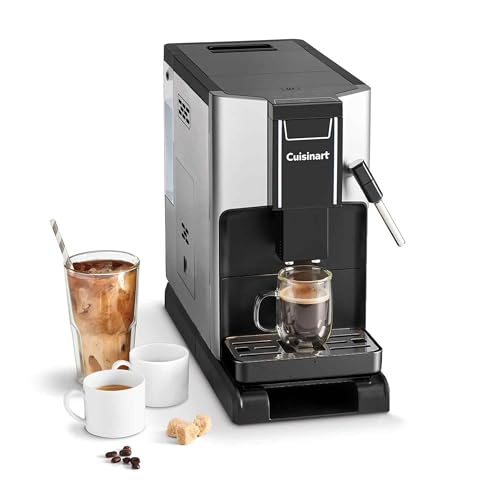
- Fully automatic drink controls
- Hot and cold beverage options
- Built-in whole-bean grinder
Best For: Busy offices prioritizing easy drink variety
Best for Commercial-Style Control
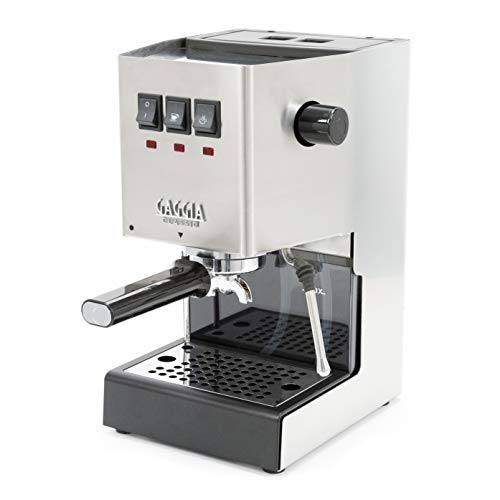
- Commercial 58mm portafilter
- Nine-bar espresso extraction
- Ground coffee and ESE pod support
Best For: Coffee-focused offices comfortable with semi-automatic brewing
Best Compact Classic
De'Longhi Classic Signature Espresso Machine

- 15-bar pump and Thermoblock temperature control
- Adjustable steam wand for milk and alternatives
- Customizable single- and double-shot presets
Best For: Compact office counters and customizable espresso drinks
Best for Milk Drinks

- Automatic steam wand for microtextured milk foam
- Three temperature and milk-texture settings
- Dishwasher-safe parts and 54-ounce removable tank
Best For: Office teams making customizable lattes and cappuccinos
Best Manual Value
De'Longhi Stilosa Compact Espresso Machine
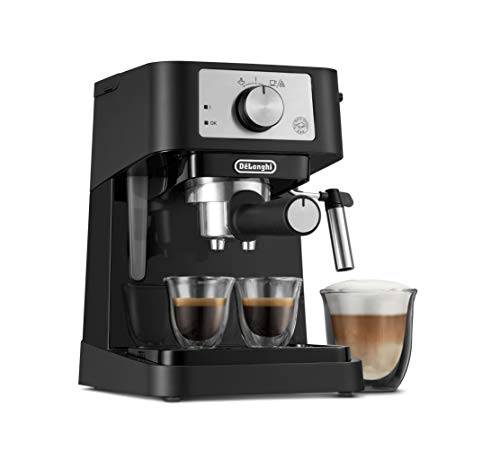
- 15-bar pump with single- and double-shot filters
- Manual steam wand for lattes and cappuccinos
- Compact design with included scoop/tamper
Best For: Small offices that prefer hands-on brewing
Hands-On Office Favorite – Breville Barista Express
The Breville Barista Express is a strong choice for office kitchens where employees want freshly ground espresso and hands-on control. Its integrated conical burr grinder, adjustable grind dial, PID temperature control, and manual steam wand support customized espresso drinks without requiring a separate grinder.
Best For: Small office teams that value manual control and fresh bean-to-cup espresso.
Pros:
- Integrated grinder doses beans directly into the portafilter.
- PID temperature control and low-pressure pre-infusion support balanced extraction.
- Manual steam wand creates textured microfoam for lattes and cappuccinos.
- Includes a 67-ounce water tank and 1/2-pound bean hopper.
Cons:
- Manual operation requires more skill and involvement than a fully automatic machine.
- The 22.1-pound body and roughly 16-inch height need substantial counter space.
Choose the Barista Express when the office wants café-style customization and does not mind learning the grinding, tamping, and milk-texturing process.
Most Versatile Office Brewer – Ninja Luxe Café Pro
The Ninja Luxe Café Pro Series is designed for busy office kitchens that need more than espresso. It combines espresso, drip coffee, cold brew, and an independent hot-water system, while guided dosing, grind recommendations, and brew adjustments reduce guesswork for multiple users.
Best For: Larger or mixed-preference offices that want espresso, regular coffee, cold brew, tea, and hot chocolate from one machine.
Pros:
- Offers four functions, including espresso, drip coffee, cold brew, and hot water.
- Weight-based dosing, 25 grind settings, and Barista Assist Technology simplify consistency.
- Dual Froth System Pro supports hot or cold foam and can froth for two drinks.
- Built-in storage keeps accessories organized.
Cons:
- At 27.1 pounds, it is relatively heavy for moving or rearranging.
- Its broad range of programs may be more machine than a small espresso-only office needs.
This is the most flexible option for shared kitchens where drink preferences vary and convenience matters as much as espresso quality.
Best Guided Espresso Experience – Breville Barista Touch
The Breville Barista Touch suits office kitchens where users want café-style drinks with less manual dialing-in. Its touchscreen guides the grind, brew, and milk stages, while the integrated grinder, three-second ThermoJet heat-up system, and automatic steam wand make repeatable drinks more approachable.
Best For: Offices that want customizable espresso beverages with a simpler touchscreen workflow.
Pros:
- Touchscreen simplifies the process into grind, brew, and milk steps.
- Stores up to eight personalized coffees for repeatable preparation.
- Automatic steam wand lets users set milk temperature and texture.
- ThermoJet heating reaches extraction temperature in three seconds.
Cons:
- The 15.5-inch width and 16-inch height require generous counter clearance.
- Users seeking fully manual control may prefer a more traditional interface.
The Barista Touch is a practical middle ground for shared spaces: it offers personalization and milk-drink capability while reducing the learning curve of manual espresso preparation.
Best Simple All-Rounder – Ninja Luxe Café Premier
The Ninja Luxe Café Premier is a practical option for office kitchens that need espresso and everyday coffee in one countertop appliance. Its 3-in-1 design supports espresso, drip coffee, and cold brew, while assisted grinding, weight-based dosing, tamping, and automatic frothing help different users achieve consistent results.
Best For: Offices seeking an approachable espresso-and-coffee combination machine with minimal manual work.
Pros:
- Brews espresso, drip coffee, and cold brew in multiple styles and sizes.
- Barista Assist Technology guides grinding, dosing, tamping, temperature, and pressure.
- Hands-free frothing offers preset hot and cold foam programs.
- Built-in accessory storage helps conserve counter and drawer space.
Cons:
- It provides fewer espresso styles than the Pro Series.
- Its 13.39-inch width and 14.57-inch height still require dedicated counter space.
For offices that want accessible espresso alongside drip and cold-brew options, the Luxe Café Premier delivers broad functionality without making every user become a barista.
Best for Hands-On Office Baristas – Breville Barista Pro
For office kitchens where employees value fresh beans and hands-on control, the Breville Barista Pro combines an integrated conical burr grinder with a manual steam wand and guided LCD interface. Its ThermoJet system reaches extraction temperature in about three seconds, helping reduce wait times during busy coffee breaks.
Best For: Offices that want customizable espresso, cappuccinos, and lattes without adding a separate grinder.
Pros:
- Built-in grinder doses whole beans on demand.
- ThermoJet heating supports fast transitions from espresso to steaming.
- PID temperature control and low-pressure pre-infusion support consistent extraction.
- Includes a milk jug, cleaning kit, water filter, and dose-trimming tool.
Cons:
- Manual operation requires staff to learn dosing, tamping, and milk steaming.
- Its 1/2-pound hopper and 67-ounce water tank may require refilling in a high-volume office.
The Barista Pro is a strong fit when beverage quality and customization matter more than push-button simplicity. The LCD guidance can help beginners, while the manual controls give experienced users room to refine each drink.
Best for Push-Button Variety – Cuisinart Espresso Bar EM-550
The Cuisinart Espresso Bar is designed for shared office kitchens where convenience and drink variety are priorities. Its fully automatic operation, built-in grinder, one-touch controls, and support for hot or cold beverages make it easy to prepare espresso, cappuccinos, lattes, Americanos, and cold extracted espresso.
Best For: Busy teams that want simple, adjustable espresso drinks with minimal manual preparation.
Pros:
- One-touch controls offer automatic single shots, double shots, and Americanos.
- Built-in stainless steel conical burr grinder uses whole beans.
- Supports both hot and cold espresso preparations.
- Adjustable brew head and base accommodate different mug sizes, including travel mugs.
Cons:
- The 50-fluid-ounce capacity may require frequent refilling in a larger office.
- The frothing wand still requires some manual milk preparation.
This is the most approachable option for offices with varied preferences and limited time for training. Automatic drink selections simplify service, while the frothing wand preserves some control over milk-based beverages.
Best for Commercial-Style Control – Gaggia Classic Evo Pro
The Gaggia Classic Evo Pro suits office kitchens that prefer traditional espresso preparation and durable-feeling components. Made in Italy with a solid steel housing, 58mm commercial portafilter, commercial steam wand, and nine-bar extraction, it supports espresso, ESE pods, milk frothing, and latte art.
Best For: Offices with coffee enthusiasts who are comfortable using a semi-automatic machine and want commercial-style controls.
Pros:
- Commercial 58mm portafilter and three-way solenoid valve support traditional preparation.
- Nine-bar extraction is specified for espresso brewing.
- Commercial steam wand supports frothing and latte art.
- Accepts ground coffee and ESE pods, offering preparation flexibility.
Cons:
- It has no built-in grinder, so the office needs a separate grinder for whole beans.
- Semi-automatic operation involves more hands-on steps than a fully automatic model.
- The 2.1-liter reservoir can still require attention during heavy shared use.
The Classic Evo Pro is a better match for a skilled office coffee station than a grab-and-go setup. Its commercial components and flexible coffee inputs reward users who enjoy a more deliberate brewing process.
Best Compact Classic – De'Longhi Classic Signature Espresso Machine
The De’Longhi Classic Signature is a practical choice among espresso machines for office kitchens when you want a compact stainless-steel design and straightforward drink customization. Its 15-bar pump, Thermoblock heating, and steam wand support espresso, cappuccino, latte, and iced coffee preparation.
Best For: Office kitchens that need a compact machine for customizable single or double espresso drinks.
Pros:
- Thermoblock technology provides fast, stable temperature control.
- Adjustable steam wand handles steamed or frothed milk and alternatives.
- Customizable single- and double-shot preset recipes simplify repeat brewing.
- Removable tank and auto shut-off add everyday convenience.
Cons:
- Uses ground coffee rather than whole beans or pods.
- Its manual steam wand requires some user involvement.
- The listed dimensions may be substantial for very shallow counters.
With its compact footprint and preset dosing, this model balances office-friendly operation with hands-on milk preparation. It is a sensible fit when drink variety matters but a fully automated milk system is not required.
Best for Milk Drinks – De'Longhi Dedica Maestro Plus
The De’Longhi Dedica Maestro Plus stands out among espresso machines for office kitchens for its automatic steam wand and multiple temperature and milk-texture settings. Advanced Thermoblock heating, a 54-ounce removable tank, and dishwasher-safe parts support faster service and simpler cleanup.
Best For: Offices where users want customizable cappuccinos, lattes, and microtextured milk foam with less manual frothing.
Pros:
- Automatic steam wand creates microtextured milk foam and supports latte art.
- Three temperature and milk-texture settings allow drink customization.
- Advanced Thermoblock heating helps the machine become ready quickly.
- Dishwasher-safe parts and a removable tank simplify maintenance.
Cons:
- Its semi-automatic operation still requires hands-on preparation.
- It is heavier than the other listed De’Longhi models.
- It uses ground coffee, so brewing involves handling and dosing grounds.
This is the most feature-focused option of the three for milk-based beverages. The automatic wand and adjustable settings can make shared office drink preparation more approachable, while the compact stainless-steel design keeps it suitable for a countertop.
Best Manual Value – De'Longhi Stilosa Compact Espresso Machine
The De’Longhi Stilosa is a straightforward option among espresso machines for office kitchens when budget-friendly manual brewing and a small footprint are priorities. It includes single- and double-shot filters, a 15-bar pump, and a manual steam wand for espresso, lattes, and cappuccinos.
Best For: Small offices that prefer hands-on espresso preparation and a simple manual milk-frothing setup.
Pros:
- Compact design fits more easily on limited counter space.
- Manual steam wand supports milk texturing for lattes and cappuccinos.
- Includes a portafilter, measuring scoop/tamper, and single- and double-shot filters.
- Stainless-steel boiler is designed for long-term use.
Cons:
- Manual operation requires more skill and attention from each user.
- Milk frothing is less automated than on the Dedica Maestro Plus.
- It has a smaller 1,000-milliliter tank than the 54-ounce Dedica model.
The Stilosa keeps the process simple and hands-on, making it suitable for an office where users are comfortable measuring, tamping, and steaming milk themselves. Its included accessories also make it a practical starting point for manual espresso preparation.
How We Picked the Best Espresso Machines for Office Kitchens
We focused on machines that suit shared spaces, where multiple people may use the equipment throughout the day. Our comparison considers brewing control, drink versatility, learning curve, cleaning demands, footprint, reservoir capacity, and the consistency users can reasonably expect from each type of machine.
We also included several operating styles. Manual and semi-automatic models can appeal to coffee enthusiasts who want control over grinding, dosing, tamping, and milk texture. Super-automatic and multifunction machines generally make more sense when speed, repeatability, and broad drink selection matter most.
Quick Comparison
| Best For | Look For | Main Trade-Off |
|---|---|---|
| Hands-on coffee enthusiasts | Portafilter control and strong steam performance | More training and cleanup |
| Busy teams | Automated dosing, guided controls, and simple presets | Higher cost and more complex maintenance |
| Mixed drink preferences | Espresso, drip, cold brew, and hot-water functions | Larger footprint and more settings |
| Small office kitchens | Compact design and removable water tank | Smaller capacity or slower drink preparation |
Key Buying Factors for Espresso Machines for Office Kitchens
Ease of Use
Shared equipment should not require every user to understand espresso extraction. Guided controls, presets, automatic grinding, and simple milk systems reduce training time. If the machine is manual, choose one with clear controls and forgiving operation.
Capacity and Speed
Check the water-tank size, bean hopper capacity, heating system, and recovery time. A small machine may work well for a few drinks per day but become inconvenient during busy mornings. Removable tanks and accessible drip trays also make refilling and emptying easier.
Milk and Drink Variety
Consider whether employees mainly drink straight espresso or prefer cappuccinos, lattes, Americanos, iced coffee, or cold brew. Automatic milk frothing improves consistency, while a manual steam wand offers more control but requires practice and regular purging.
Cleaning and Maintenance
Look for removable brewing components, dishwasher-safe parts where applicable, descaling alerts, and accessible milk-system components. In an office, assign a cleaning schedule rather than relying on occasional individual users to maintain the machine.
Counter Space and Noise
Measure the available depth, height, and clearance beneath cabinets before buying. Grinders, pumps, and steam systems can be noisy, so placement matters in open-plan kitchens or near work areas.
Who Should Buy Which Espresso Machines for Office Kitchens?
Choose a semi-automatic Breville or Gaggia-style setup if your office has enthusiastic coffee drinkers who value control and do not mind learning a repeatable process. Choose an automated Breville, Cuisinart, or similar convenience-focused model when multiple users need consistent drinks with minimal instruction.
A multifunction Ninja machine is a strong fit for offices with varied preferences, especially when espresso, drip coffee, cold brew, and hot water all need to come from one appliance. Compact De’Longhi options suit smaller kitchens or lower-volume use, while a machine with a larger tank and broader controls is preferable for a busy team.