Choosing among cider presses for small businesses means balancing batch capacity, pressing force, sanitation, durability, and available workspace. The right press can improve juice yield without creating unnecessary cleanup or slowing production.
This roundup compares 10 manual and hydraulic models, including compact presses for seasonal producers and larger stainless-steel options for businesses handling more fruit. Use the buying guide below to match press size and design to your expected workload.
Best 10 Cider Presses for Small Businesses Picks for 2026
Best High-Capacity Hydraulic Press
10.6-Gallon Mosakar 5-Ton Press

- 10.6-gallon batch capacity
- 5-ton hydraulic pressure
- 304 stainless-steel juice-contact parts
Best For: Small orchards and recurring harvest-season pressing
Best Manual Wooden Press
4.75-Gallon Beech Basket Cider Maker

- Solid red beechwood basket
- Quiet hand-operated design
- Built-in pour spout and removable basket
Best For: Small juice shops and low-volume seasonal pressing
Best Fruit Crusher Companion

- Processes 35–45 kg of fruit per hour
- Produces uniform quarter-inch pieces
- 304 stainless-steel construction
Best For: Preparing apples and pears before pressing
Best Compact Hydraulic Press
9.51-Gallon Stainless Cider Press

- 6,613 pounds of hydraulic pressure
- 9.51-gallon batch capacity
- Includes filter bucket, cloth, and hose outlet
Best For: Compact workspaces handling larger seasonal batches
Effort-Saving Manual Pick

- 18-liter pressing capacity
- Stainless steel crusher and components
- Manual, portable design
Best For: Small-batch cider and juice operations
High-Pressure Production Pick

- 6,613.87-pound hydraulic pressure
- 304 stainless steel construction
- Reinforced frame for stability
Best For: Higher-volume cider and fruit juice pressing
Traditional Small-Batch Pick
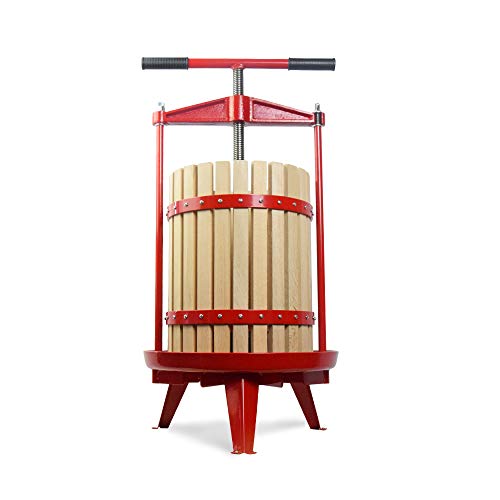
- Presses 22 to 33 pounds per batch
- Portable manual operation
- Includes one filter bag
Best For: Farm stands and small fresh-juice operations
Heavy-Duty Capacity Pick
30L Mosakar Hydraulic Fruit Press

- 30-liter capacity for larger batches
- 3-ton hydraulic pressing force
- Stainless steel juice-contact parts
Best For: Small businesses processing larger cider or juice batches
Compact Traditional Pick
SQUEEZE master 6L Wooden Cider Press

- 6-liter capacity for modest batches
- Extended handle eases manual pressing
- Includes a filter bag
Best For: Small eateries, farm stands, and low-volume juice production
Versatile Hydraulic Pick
VEVOR 30L Stainless Steel Fruit Press

- 30-liter capacity for larger batches
- 3-ton jack-style pressing force
- Works with fruit, vegetables, herbs, and more
Best For: Small farms, orchards, kitchens, and wineries with varied pressing needs
Best High-Capacity Hydraulic Press – 10.6-Gallon Mosakar 5-Ton Press
For small businesses needing dependable cider presses for small businesses, the Mosakar offers a useful combination of batch capacity and hydraulic force. Its 40-liter basket and 5-ton jack are suited to processing substantial amounts of fruit, while stainless-steel juice-contact parts simplify cleanup and resist acidic juice.
Best For: Small orchards, seasonal cider production, and users pressing apples, grapes, herbs, nut milks, or honey.
Pros:
- 10.6-gallon capacity supports larger batches.
- Hydraulic jack supplies up to 5 tons of pressure.
- AISI 304 stainless-steel pressing parts resist juice acidity and are easy to clean.
- Adjustable tray height and a 90-degree-turning beam improve loading and container placement.
Cons:
- At 85 pounds, it is relatively heavy to move.
- The larger frame may require dedicated workspace.
This is a strong fit when throughput and reduced manual effort matter more than portability. Its durable frame and adjustable juice tray also make it practical for recurring harvest-season use.
Best Manual Wooden Press – 4.75-Gallon Beech Basket Cider Maker
For small businesses seeking cider presses for small businesses with a traditional, low-noise design, this manual fruit press is a practical option. Its 4.75-gallon beechwood basket, heavy-duty stand, and hand-operated press plate support straightforward juice and wine production without a motor.
Best For: Small juice shops, family-scale production, and seasonal apple, grape, or berry pressing.
Pros:
- Solid red beech basket is designed for moisture and wear resistance.
- Manual operation is quiet and does not require a motor.
- Built-in pour spout helps collect juice directly.
- Breakaway basket design makes pulp removal more convenient.
Cons:
- Manual pressing requires more physical effort than hydraulic models.
- Its 4.75-gallon capacity is better suited to smaller batches.
- Hand-wash care may add cleanup time.
This press favors simplicity and hands-on control. The stable stand and removable basket make it a sensible choice for smaller operations that value quiet use and a traditional wooden pressing setup.
Best Fruit Crusher Companion – 7-Liter Manual Apple Grinder
Although it is a crusher rather than a complete press, this manual grinder can be an important preparation tool for cider presses for small businesses. It breaks apples and pears into uniform pieces before pressing, with a 7-liter hopper and stated processing rate of 35–45 kilograms per hour.
Best For: Small cider operations that need a compact manual scratter for preparing apples, pears, grapes, and other fruit.
Pros:
- 7-liter hopper handles a useful amount of fruit between loads.
- Produces uniform quarter-inch pieces designed for efficient pressing.
- 304 stainless steel and a reinforced iron frame support durability.
- Table-mount components help keep the crusher secure during use.
Cons:
- It crushes fruit but does not extract juice by itself.
- Manual operation requires ongoing physical effort.
- Its table-mount setup may limit placement flexibility.
Pair this crusher with a separate basket or hydraulic press to improve preparation consistency and reduce wasted pulp. Its compact dimensions and manual design suit smaller workspaces and home-garden processing areas.
Best Compact Hydraulic Press – 9.51-Gallon Stainless Cider Press
For small businesses comparing cider presses for small businesses, this 36-liter hydraulic model offers high batch capacity in a compact footprint. Its manual hydraulic jack delivers up to 6,613 pounds of pressure, while the stainless-steel construction, filter accessories, and hose outlet support practical juice and wine processing.
Best For: Small-scale winemaking, cider production, and compact workspaces handling larger seasonal batches.
Pros:
- 9.51-gallon outer bucket supports larger batches.
- Hydraulic force reduces fatigue during pressing.
- 304 stainless steel resists corrosion and supports easier cleanup.
- Includes a filter bucket, cloth, hose outlet, and side handles.
Cons:
- Manual hydraulic operation still requires loading and repeated handling.
- The supplied product dimensions are inconsistent with the stated compact footprint, so workspace planning should be checked carefully.
- At 42.6 pounds, it is portable but not especially light.
This model balances capacity, pressing force, and accessory support without the weight of the larger 85-pound press. It is especially appealing when a small production area needs efficient batch processing and straightforward draining.
Effort-Saving Manual Pick – 4.75-Gallon Wood Basket Press
For small businesses seeking cider presses for small businesses, this manual SQUEEZE master model combines an 18-liter solid wood basket with a stainless steel crusher. Its extended hand shank and phase-in pressing design are intended to reduce effort while processing apples and other firm produce.
Best For: Small juice operations and market vendors that want a portable, manually operated press with a separate crusher.
Pros:
- 4.75-gallon capacity for fruit and vegetable pressing.
- Food-grade stainless steel construction is rust resistant.
- Extended handle and larger pressing area are designed for easier, higher-yield pressing.
- Works with hard produce such as apples, pears, peaches, and carrots.
Cons:
- Manual operation requires hands-on labor.
- Hand-wash care may add cleanup time.
- Wood-and-stainless construction may require more maintenance than an all-metal setup.
This is a practical choice when portability and straightforward manual operation matter more than powered throughput. The included crusher broadens its usefulness for small-batch cider and juice preparation.
High-Pressure Production Pick – 5.8-Gallon Hydraulic Press
For cider presses for small businesses that need greater pressing force, this stainless steel model uses a hydraulic jack rated at 6,613.87 pounds of pressure. Its 5.81-gallon outer barrel and 2.91-gallon filter barrel support larger batches than a basic hand-screw press.
Best For: Small commercial or high-volume home operations prioritizing strong extraction pressure and a stable frame.
Pros:
- Food-grade 304 stainless steel is rust resistant and hygienic.
- Hydraulic jack helps reduce manual pressing effort.
- Large outer and filter barrels support substantial batches.
- Reinforced triangular brackets provide a stated load capacity of up to 330.69 pounds.
Cons:
- Its hydraulic operation may be less simple than a basic hand-operated press.
- The supplied notes do not specify portability or included accessories.
- Capacity is divided between an outer barrel and filter barrel, so usable workflow may require planning.
Choose this press when extraction force, batch capacity, and frame stability are the main priorities. It is also versatile enough for cider, wine, and other fruit juices.
Traditional Small-Batch Pick – 4.75-Gallon T-Handle Press
Among cider presses for small businesses, this traditional SQUEEZE master model stands out for its solid wood basket, T-shaped handle, and portable design. It can press approximately 22 to 33 pounds of fruit at a time and includes a filter bag for cleaner juice handling.
Best For: Farm stands, eateries, family events, and small fresh-squeezed fruit operations that value a traditional manual setup.
Pros:
- 4.75-gallon capacity with a stated 22-to-33-pound fruit load.
- T-handle and phase-in pressing design are intended to improve ease of use and stability.
- Suitable for apples, grapes, and other fruit, as well as some additional pressing applications.
- Includes one filter bag and requires no external power source.
Cons:
- Manual operation can limit throughput for larger commercial workloads.
- Wood construction and hand-wash care require regular attention.
- The uncoated finish may offer less surface protection than stainless steel alternatives.
This press fits businesses producing fresh juice in modest batches and wanting a visible, traditional pressing process. Its included filter bag and portable format add practical value for occasional service or mobile use.
Heavy-Duty Capacity Pick – 30L Mosakar Hydraulic Fruit Press
For small businesses comparing cider presses for small businesses, the Mosakar stands out for batch capacity and high pressing force. Its 30-liter basket and 3-ton hydraulic system are suited to regular apple, grape, wine, and cider processing.
Best For: Small businesses needing a durable, high-capacity manual press for larger batches.
Pros:
- 30-liter capacity supports larger pressing batches.
- 3 tons of pressure helps maximize juice extraction.
- AISI 304 stainless steel juice-contact parts are easier to clean.
- Powder-coated frame is designed for long-term durability.
Cons:
- At 66 pounds, it is relatively heavy to move.
- Its larger frame requires more storage space.
This is a strong choice when throughput and robust construction matter more than portability. Stainless steel components and a solid frame also make it practical for repeated use.
Compact Traditional Pick – SQUEEZE master 6L Wooden Cider Press
For smaller operations seeking cider presses for small businesses, this manual wooden press offers a compact, traditional setup. Its 6-liter basket, extended handle, and included filter bag make it suitable for modest fruit batches and direct-to-customer fresh juice service.
Best For: Small eateries, farm stands, family businesses, and low-volume fresh-juice production.
Pros:
- Compact 6-liter capacity is suited to smaller batches.
- Extended hand shank is designed to reduce pressing effort.
- Thick pressing plate and broad pressing area support juice yield.
- Includes one filter bag and can handle fruit, pomace, and honeycomb.
Cons:
- Its smaller capacity requires more batches for higher production volumes.
- Assembly is required.
- Manual operation may be slower than a hydraulic press for continuous production.
This press is a practical fit where portability and a vintage presentation are valuable. Choose it over a larger hydraulic model when batches are modest and a traditional manual workflow suits the business.
Versatile Hydraulic Pick – VEVOR 30L Stainless Steel Fruit Press
Businesses looking for cider presses for small businesses may value this VEVOR model for its 30-liter capacity and broad application range. The 3-ton jack-style press is designed for apples, grapes, vegetables, honey, olive oil, herbal mash, and separating pulp after fermentation.
Best For: Small orchards, farms, kitchens, and wineries needing one press for varied ingredients.
Pros:
- 30-liter capacity supports large-batch processing.
- 3-ton maximum load provides substantial manual pressing force.
- Thickened 4 mm pressing plate is designed for efficient extraction.
- Removable bucket and two filter bags simplify cleanup and processing.
Cons:
- At 57.8 pounds, it may be cumbersome to reposition.
- The larger capacity may be unnecessary for very small batches.
This model offers a useful balance of capacity, force, and versatility. It is particularly appealing for businesses that process more than cider and want a removable bucket for faster rinsing between batches.
How We Picked These Cider Presses for Small Businesses
We focused on the factors that matter most in a small commercial or farm-based operation: basket capacity, pressing mechanism, juice-contact materials, stability, ease of loading, cleanup, and portability. The selection includes manual wood-basket presses, stainless-steel models, and hydraulic designs with higher pressing force. Because product specifications and included accessories can vary, verify the current listing for exact dimensions, pressure ratings, and replacement-part availability before ordering.
Quick Comparison
| Press type | Typical strength | Best suited to |
|---|---|---|
| Compact manual press | Low cost and easy storage | Small batches, farm stands, and test production |
| Wood-basket manual press | Traditional operation and straightforward maintenance | Seasonal cider makers and direct-to-consumer sales |
| Stainless-steel manual press | Durable, washable construction | Frequent use where sanitation is a priority |
| Hydraulic press | More pressing force with less physical effort | Higher-volume batches and repeated production days |
Key Buying Factors for Cider Presses for Small Businesses
Capacity and Batch Workflow
Choose capacity based on how much fruit you process between loads, not simply the largest advertised basket. A 6L or 18L press may suit a small orchard or limited seasonal menu, while 30L to 40L models can reduce loading and unloading during larger runs. Remember to leave room for crushed fruit and account for the time required to empty and clean the basket.
Pressure, Construction, and Stability
Hydraulic models generally reduce manual effort and can be useful when staff press repeatedly throughout the day. Manual presses may be simpler and easier to service. Look for a rigid frame, a stable base, a robust spindle or hydraulic assembly, and a basket that will not flex under load.
Sanitation and Juice-Contact Materials
Stainless steel is typically easier to wash and inspect than porous or unfinished materials, especially when several batches are processed in succession. Wood baskets can work well but require thorough drying and regular inspection. Confirm which components contact juice and whether liners, trays, and pressing plates are removable.
Space, Power, and Maintenance
Manual presses are useful where electricity is limited or equipment must be moved. Hydraulic presses may offer greater productivity but need a suitable operating area and careful handling. Check the press footprint, working height, storage needs, replacement parts, and cleaning instructions before purchase.
Who Should Buy Which Cider Presses for Small Businesses?
Choose a compact manual model if you produce occasional small batches, have limited storage, or want the lowest entry cost. Choose a traditional wood-basket press if appearance, simplicity, and hands-on operation are important for a farm shop or tasting-room setting. Choose a stainless-steel press if frequent cleaning, durability, and visible hygiene are central to your workflow. Choose a hydraulic press if your business processes substantial quantities and reducing operator fatigue is worth the higher investment.
For any of these Cider Presses for Small Businesses, compare actual basket capacity with your crusher output, plan for a separate fruit crusher if needed, and confirm that the press can be cleaned and stored efficiently between production runs.