Choosing among electric corn grinders is easier when you match the machine to your batch size, grind consistency, and intended use. The options in this roundup range from compact stainless-steel pulverizers to heavy-duty feed mills built for larger workloads.
Use the comparison and buying advice below to narrow the field by power, capacity, sieve flexibility, construction, and safety features before you buy.
Best 10 Electric Corn Grinders Picks for 2026
High-Speed Home Milling
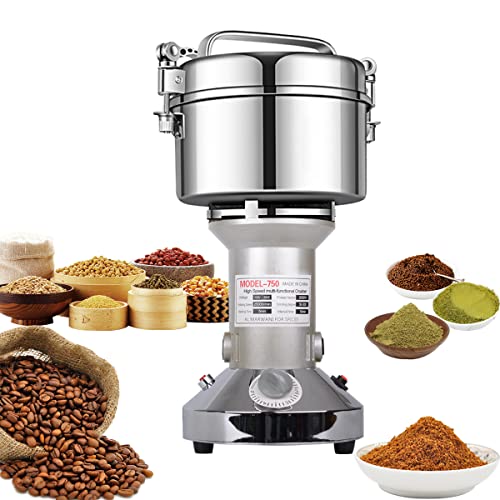
- 2,000W motor with 25,000 RPM speed
- 750g capacity and 50–300 mesh fineness
- Overload protection for dry ingredients
Best For: Small-batch home grinding of corn, grains, spices, and herbs
Flexible Feed Preparation

- 25-liter hopper for larger batches
- Five sieves from 2mm to 8mm
- Detachable hopper and bucket
Best For: Farm and homestead feed preparation using dry corn and grains
Timed Fine Grinding

- 2,100W, 28,000 RPM motor
- 5-, 15-, and 30-second timer settings
- 30–300 mesh grinding range
Best For: Fast, fine small-batch grinding of dry corn, grains, spices, and coffee
Farm-Scale Feed Milling

- 25-liter hopper for higher-volume batches
- Seven interchangeable grinding sieves
- 1,500W motor for dry grain and feed
Best For: Small farms and homesteads producing customized livestock feed
Heavy-Duty Choice

- Processes about 110 lb per hour
- Adjustable 30–300 mesh fineness
- Cast-iron build with non-slip feet
Best For: High-volume dry-grain and spice grinding
Farm Feed Specialist

- Large 60L feed hopper
- Includes seven interchangeable sieves
- Designed for dry livestock-feed grains
Best For: Farm and homestead feed preparation
Compact Safety Pick
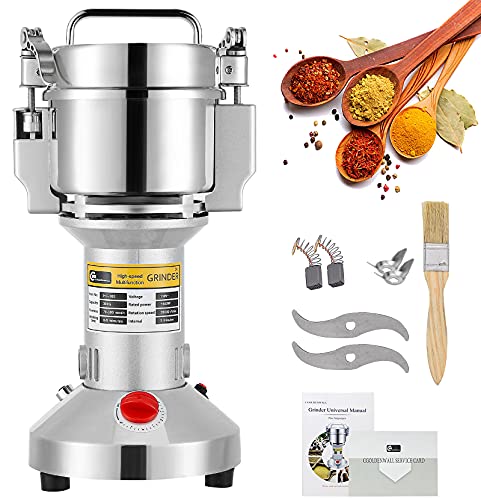
- Small 300g batch capacity
- Fine 70–300 mesh grinding range
- Safety lid and overload protection
Best For: Small household batches of dry grains and spices
High-Capacity Farm Mill

- Processes up to 200 lb of grain per hour
- Adjustable coarse-to-fine grinding
- Durable galvanized cast iron housing
Best For: Small farms and high-volume dry grain milling
Versatile Commercial Mill
NAIZEA 3000W Dry & Wet Corn Grinder
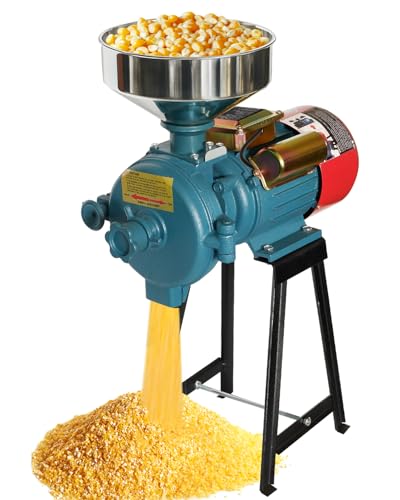
- Handles dry grains and soaked ingredients
- Lists material-specific grinding rates
- Heavy galvanized cast iron construction
Best For: Commercial milling, wet processing, and feed crushing
Wet-and-Dry Flexibility
VEVOR 3000W Adjustable Corn Mill

- Includes separate dry and wet milling discs
- Adjustable thickness for varied ingredients
- Stainless steel funnel and cast iron body
Best For: Flexible home, food-preparation, and feed milling
High-Speed Home Milling – 750g Electric Grain Grinder
This compact, high-speed option is designed for shoppers comparing electric corn grinders for dry grains and household food-preparation tasks. Its 2,000-watt motor, 750g capacity, 25,000 RPM speed, and triple-blade design can process dry corn, rice, wheat, coffee, spices, and herbs into powder.
Best For: Home kitchens, small-batch dry corn grinding, spices, herbs, and other dehydrated ingredients.
Pros:
- High-speed 2,000-watt motor with 25,000 RPM operation.
- Triple blades and adjustable fineness from 50 to 300 mesh.
- Stainless-steel construction with overload shutoff protection.
- Handles a broad range of dry grains, spices, herbs, and coffee.
Cons:
- For dry ingredients only; wet, oily, or moist materials are not suitable.
- Recommended operation is limited to three minutes followed by a five- to ten-minute rest.
- Cleaning requires a damp cloth or paper towel rather than rinsing the motorized unit.
This model is a practical choice when speed and fine powder production matter more than continuous processing. Its smaller batch size and required rest periods make it better suited to home use than large-scale feed milling.
Flexible Feed Preparation – 6.6-Gallon Electric Corn Mill
For shoppers seeking electric corn grinders with more room for feed preparation, this 6.6-gallon model is built for household or farm use. Its 1,000-watt motor, detachable design, and five interchangeable sieves support different particle sizes for dry corn, grains, spices, and animal feed.
Best For: Small farms, homesteads, and households preparing dry corn or grain feed for chickens, cattle, sheep, pigs, and goats.
Pros:
- Large 25-liter capacity for fewer refills.
- Includes five sieves in 2, 3, 4, 6, and 8mm sizes.
- Detachable hopper and bucket simplify transport and cleaning.
- Simple green start and red stop controls.
Cons:
- The motor area must be kept away from water.
- The hopper needs to be dried thoroughly before reassembly.
- Its 1,000-watt motor is less powerful on paper than several compact high-speed grinders.
The generous hopper and replaceable screens make this a useful choice for feed-oriented grinding where capacity and adjustable texture are more important than ultra-fine powder. Its portable, detachable construction also suits occasional farm or homestead use.
Timed Fine Grinding – VEVOR 1.8-lb Pulverizer
This VEVOR model stands out among electric corn grinders for its timed controls and compact swing-type design. The 2,100-watt, 28,000-RPM motor uses three stainless-steel blades to grind dry corn, grains, coffee, and spices, with stated fineness ranging from 30 to 300 mesh.
Best For: Users who want fast, fine grinding with simple timed operation for dry kitchen, laboratory, or small-batch processing.
Pros:
- Powerful 2,100-watt motor operating at 28,000 RPM.
- 5-, 15-, and 30-second timing options support repeatable batches.
- 800g cup and 270-degree swing design help improve discharge and reduce sticking.
- Compact stainless-steel build with a damp-cloth cleaning routine.
Cons:
- Not intended for wet, oily, or sticky ingredients.
- Continuous operation is limited to five minutes, followed by a five- to ten-minute rest.
- Hard ingredients may need to be cut before grinding.
This is a strong fit for buyers prioritizing speed, fine results, and controlled batch timing. The smaller working capacity and dry-material limitation make it less appropriate for high-volume livestock feed production.
Farm-Scale Feed Milling – 6.6-Gallon Red Corn Grinder
Designed for farm and homestead work, this large-capacity machine is one of the more feed-focused electric corn grinders in the roundup. Its 6.6-gallon hopper, 1,500-watt motor, and seven interchangeable sieves are intended for dry corn, wheat, rice, barley, sorghum, soybeans, and livestock-feed preparation.
Best For: Homesteaders and small farms making customized feed for chickens, ducks, pigs, goats, cattle, and other livestock.
Pros:
- Large 25-liter hopper supports higher-volume processing with fewer refills.
- Seven interchangeable sieves allow customized particle sizes.
- Suitable for multiple dry grains and feed applications.
- Built-in handle and straightforward green start/red stop controls improve usability.
Cons:
- Listed for 230-volt operation, so electrical compatibility should be confirmed.
- Designed for dry materials only.
- Sieves must be replaced only after unplugging the mill and clearing any clog.
With its large hopper and seven screens, this model is geared toward users who need adaptable feed textures and regular grain processing. Check the required voltage before buying, especially for household installations.
Heavy-Duty Choice – VEVOR 1500W Grain Mill
For shoppers comparing electric corn grinders for larger batches, this VEVOR model combines a 1500W motor with cast-iron grinding plates and adjustable fineness. It is designed for dry corn and other grains, with a stated processing rate of about 110 pounds per hour.
Best For: Farms, ranches, homesteads, and users who need adjustable, high-volume grinding of dry grains and spices.
Pros:
- 1500W motor processes up to about 110 pounds per hour.
- Adjustable grinding range from 30 to 300 mesh.
- Handles dry corn, grains, coffee, and spices.
- Cast-iron construction, cooling vents, and non-slip feet support steady operation.
Cons:
- At 47.2 pounds, it is not especially portable.
- Not suitable for wet, oily, or sticky materials.
This is a practical choice when throughput and grind-size control matter more than compact storage. Its industrial build may be excessive for occasional small batches, but it suits demanding dry-grain work.
Farm Feed Specialist – 60L Electric Corn Grinder
This electric corn grinder is built around feed preparation, with a 60-liter hopper and seven interchangeable sieves. It can process dry corn, wheat, rice, and other grains into customized textures for poultry, livestock, or household use.
Best For: Homesteaders, small farms, and livestock owners preparing larger quantities of customized animal feed.
Pros:
- Large 60L, or 15.8-gallon, hopper reduces refill frequency.
- Seven sieves provide multiple particle-size options.
- Suitable for dry corn, wheat, rice, barley, sorghum, and soybeans.
- Includes simple start/stop controls and a built-in carrying handle.
Cons:
- It is intended for dry materials only.
- The sieve must be changed only after unplugging the machine.
- Its large hopper may be more capacity than occasional users need.
Among electric corn grinders, this model stands out for feed-oriented capacity and flexibility. The large hopper and sieve selection make it useful for recurring farm work, provided materials are kept dry and the safety instructions are followed.
Compact Safety Pick – CGOLDENWALL 300g Grinder
For small-batch electric corn grinders, the CGOLDENWALL 300g model offers a compact stainless-steel design and fine grinding from 70 to 300 mesh. Its safety lid stops operation when opened, while the timer and overload protection add control during short grinding sessions.
Best For: Home users grinding small quantities of dry corn, grains, coffee, spices, herbs, and seeds.
Pros:
- Compact 300g capacity suits small batches.
- 1500W motor reaches up to 28,000 RPM.
- Safety lid automatically stops the grinder when opened.
- Includes a timer, overload protection, spare blades, and a cleaning brush.
Cons:
- Requires rest periods after short operating intervals.
- Not designed for wet materials or large-volume processing.
- Materials should cover the blade but remain no more than two-thirds of the tank.
This model is better suited to countertop convenience than continuous corn processing. Its small capacity, fine-grind range, and safety features make it a useful option for controlled household batches.
High-Capacity Farm Mill – 3000W Adjustable Corn Grinder
For buyers comparing electric corn grinders, this heavy-duty model combines a 3000W motor with adjustable settings for everything from coarse poultry feed to fine flour. Its stated capacity of up to 200 pounds per hour makes it suited to demanding home, farm, and small-business milling tasks.
Best For: Small livestock farms, home flour milling, brewing, emergency grain preparation, and dry spice or herb grinding.
Pros:
- 3000W copper motor is rated to process up to 200 pounds of grain per hour.
- Adjustable grind control supports coarse meal through fine powder.
- Galvanized cast iron housing is designed for durability and rust resistance.
- Handles dry corn, wheat, soybeans, rice, barley, and some herbs.
Cons:
- At 47 pounds and nearly 31 inches tall, it requires a sturdy, dedicated setup.
- The notes describe dry grinding, so wet-milling capability is not established.
- Its 3000W, 110V power requirement may be more than light-duty users need.
This is a strong choice when throughput and grind-size control matter more than portability. The industrial construction and broad dry-grain compatibility make it particularly practical for recurring farm-feed or flour-milling work.
Versatile Commercial Mill – NAIZEA 3000W Dry & Wet Corn Grinder
This NAIZEA model stands out among electric corn grinders for its stated dry- and wet-grinding capability. The 3000W motor and listed crop-specific rates make it a practical option for commercial food processing, household milling, or crushing animal feed.
Best For: Commercial or home users processing corn, wheat, rice, cereals, soaked soybeans, and animal feed.
Pros:
- 3000W motor operates at a listed speed of up to 2800 RPM.
- Supports both dry grains and wet grinding of soaked soybeans or rice.
- Published rates include up to 60 kg/h for corn and 75 kg/h for wheat or rice.
- Galvanized cast iron construction is designed to resist rust during long-term use.
Cons:
- Its 50 kg listed weight makes this a stationary machine rather than a portable grinder.
- Performance varies by material, with lower rates listed for paddy rice and wet grinding.
- The large commercial format may be excessive for occasional kitchen use.
Choose this mill if wet processing is important alongside dry corn and grain work. Its detailed capacity specifications help set realistic expectations, while the heavy construction favors a permanent workspace.
Wet-and-Dry Flexibility – VEVOR 3000W Adjustable Corn Mill
Among electric corn grinders, this VEVOR mill is notable for including separate discs for dry and wet grinding. Its adjustable thickness control, stainless steel funnel, and 3000W motor give users flexibility for grains, food ingredients, soy milk preparation, and feed crushing.
Best For: Users who need adjustable dry milling plus wet grinding for soaked soybeans and rice.
Pros:
- Includes cast iron and sand milling discs for dry and wet applications.
- Adjustable thickness control works with corn, wheat, cereal, spices, coffee beans, and nuts.
- Stainless steel funnel is built for durability and steady feeding.
- Solid cast iron body and 3000W motor support continuous grinding.
Cons:
- At roughly 28 inches tall, it needs substantial counter or stand space.
- The notes do not provide a specific pounds-per-hour capacity.
- Its specialized, industrial design may be more machine than occasional users require.
This model is a good fit when versatility matters more than a published throughput figure. The included discs and adjustable control make it useful for both dry corn milling and wet food preparation, while the cast iron construction favors regular use.
How We Picked the Best Electric Corn Grinders
We compared these Electric Corn Grinders by the factors that matter most in real use: motor power, hopper or chamber capacity, grind adjustability, included sieves, construction, safety features, and suitability for corn, wheat, rice, dry spices, and animal feed. We also considered whether each design is better suited to occasional household batches or repeated high-volume processing.
Because product specifications vary across compact mills and commercial-style machines, buyers should verify the latest capacity, voltage, dimensions, and operating instructions before ordering.
Quick Comparison
| Best For | Look For | Typical Design |
|---|---|---|
| Small household batches | Compact chamber and simple controls | 300g to 750g stainless-steel grinder |
| Chicken and livestock feed | Large hopper, durable housing, multiple sieves | 6.6- to 15.8-gallon feed mill |
| Fine flour and powder | High wattage and adjustable grinding | 1,500W to 3,000W pulverizer |
| Mixed dry ingredients | Replaceable screens and easy cleaning | Multi-purpose grain and spice mill |
Key Buying Factors for Electric Corn Grinders
Power and Workload
Higher wattage can support faster processing and tougher workloads, but it does not automatically guarantee a finer grind. A compact unit is usually more practical for occasional flour or spice batches, while a 2,100W to 3,000W machine is better suited to frequent corn, grain, or feed production. Avoid overfilling the chamber, since even powerful motors need suitable batch sizes and rest periods.
Capacity and Feeding Method
Small enclosed chambers offer better control for household quantities. Larger hopper-style mills reduce loading time when processing feed, but they require more storage space and careful handling. Check whether the listed capacity refers to the hopper, grinding chamber, or output per batch.
Grind Control and Sieves
Multiple sieves are valuable when you need different textures for cracked corn, animal feed, flour, or coarse meal. Adjustable models can provide more flexibility, but results depend on ingredient dryness, feed rate, and the machine’s design. Most mills are intended for dry ingredients only.
Construction, Cleaning, and Safety
Stainless steel is easy to wipe clean and resists corrosion, while cast iron can provide a sturdy, stable housing. Look for non-slip feet, overload protection, secure lids, ventilation, and clear operating instructions. Unplug the grinder before cleaning, and never reach into the chamber while blades or hammers are moving.
Who Should Buy Which Electric Corn Grinders?
Choose a compact 300g or 750g grinder if you mainly process spices, herbs, small amounts of corn, or occasional flour. A mid-size 6.6-gallon feed mill is a better fit for regular poultry or livestock feed without the footprint of the largest models. For farms, homesteads, or high-volume users, a 15.8-gallon or 3,000W commercial-style grinder offers greater throughput and broader feed capacity, provided you have suitable electrical service and workspace.