Preserving cabbage, cucumbers, carrots, and other harvest-season vegetables is easier when your crock provides stable brine coverage and enough room for the batch you actually plan to make.
These fermentation crocks range from compact half-gallon vessels to roomy three-gallon sets. The right choice depends on batch size, fermentation style, countertop space, and how much hands-on control you want.
Best 10 Fermentation Crocks for Seasonal Produce Picks for 2026
Best Traditional-Style Crock
1.3-Gallon Ceramic Fermentation Crock

- Includes lid, weights, and tamper
- Lead- and cadmium-free glazed ceramic
- Water-sealed design for vegetable fermentation
Best For: Seasonal vegetables in moderate-size batches
Best Simple Stoneware Option

- Compact one-gallon capacity
- Clay-and-stone stoneware construction
- Suitable for vegetables, fruit, and food storage
Best For: Small seasonal-produce batches and simple setups
Best Glass Kit for Versatility
1.5-Gallon Glass Fermentation Jar Set

- Two clear 1.5-gallon jars included
- Airlocks, gaskets, clasps, and silicone bases
- Wide mouths with measurement markings
Best For: Multi-purpose fermentation and visible batch monitoring
Best Large-Batch Crock
TOMO 7-Liter Ceramic Fermentation Crock

- Large 7-liter capacity for bigger harvests
- Includes two weights and a wooden tamper
- Wide waterlock and glazed non-porous interior
Best For: Large batches of sauerkraut, kimchi, and pickled vegetables
Timeless Stoneware Pick

- Food-safe, lead-free glaze
- Stamped 3-gallon capacity marking
- Versatile traditional stoneware design
Best For: Home fermenters wanting a classic, multipurpose crock
Complete Crock Kit

- Includes lid, stones, pounder, and masher
- 2.6-gallon/10-liter family-size capacity
- Smooth ceramic is easy to clean
Best For: Beginners and families wanting an accessory-rich kit
Classic Blue-Stripe Set

- Includes lid and two weight stones
- Lead-free, flavor-neutral glaze
- Natural stoneware with rounded handles
Best For: Traditional pickling and sauerkraut preparation
Best All-Around Crock
HomeBuddy 1-Gallon Ceramic Fermentation Crock

- 1-gallon food-grade, lead-free ceramic vessel
- Includes weights, pounder, recipes, and guide
- Water-seal lid supports anaerobic fermentation
Best For: Regular home batches of sauerkraut, kimchi, and pickled vegetables
Best for Large Harvests
2.6-Gallon Stoneware Fermentation Crock
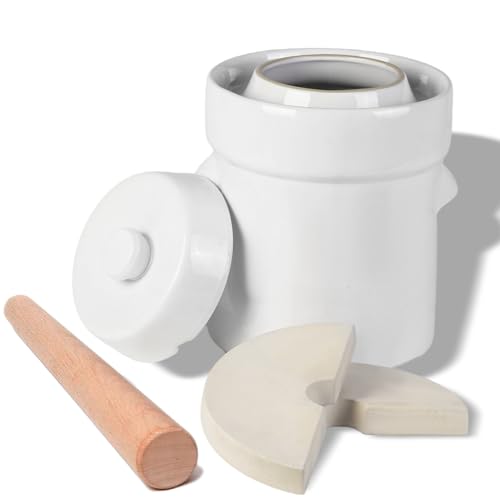
- 2.6-gallon capacity for substantial batches
- Listed capacity of 6–9 cabbages
- Includes stone weights and water-seal lid
Best For: Large seasonal harvests and family-size fermentation projects
Best Compact Option
0.5-Gallon Stoneware Fermentation Crock

- Compact 0.5-gallon size for smaller batches
- Includes stone weights and fermentation lid
- Glazed ceramic is designed for vegetables and pickles
Best For: Beginners and small households fermenting modest amounts of produce
Best Traditional-Style Crock – 1.3-Gallon Ceramic Fermentation Crock
For shoppers comparing fermentation crocks for seasonal produce, this 1.3-gallon ceramic model offers a traditional setup for sauerkraut, kimchi, pickles, and other vegetables. Its water-sealed lid, weights, and tamper are designed to help keep produce submerged during fermentation.
Best For: Home fermenters preserving seasonal vegetables in moderate batches.
Pros:
- Includes a lid, weighting stones, and pickle tamper.
- Lead- and cadmium-free glazed ceramic surface.
- Water-sealed cover allows fermentation gases to escape while limiting air exposure.
- Smooth interior and wide mouth make cleaning more convenient.
Cons:
- At 10.6 pounds, it is relatively heavy before filling.
- Ceramic construction requires careful handling.
This is a practical pick if you want a dedicated ceramic crock with the core accessories for vegetable fermentation and enough capacity to retain produce through the season.
Best Simple Stoneware Option – 1-Gallon Stoneware Crock Set
This 1-gallon stoneware set is a straightforward choice among fermentation crocks for seasonal produce. Its round white clay-and-stone construction is sized for smaller household batches and is also listed for foods ranging from vegetables and fruit to dry goods and soup.
Best For: Beginners seeking a compact, uncomplicated stoneware crock for small batches.
Pros:
- One-gallon capacity suits modest quantities of seasonal produce.
- Stoneware construction with clay and stone materials.
- Listed for vegetables, fruit, and other food-storage uses.
- Compact 9.3-by-9.3-by-10.8-inch footprint.
Cons:
- The supplied details do not specify included fermentation weights or a water-seal lid.
- At 12.4 pounds, it is heavier than some smaller vessels.
Choose this model when capacity and traditional stoneware construction matter more than a detailed accessory package; confirm the exact included components if you specifically need fermentation weights or airlock features.
Best Glass Kit for Versatility – 1.5-Gallon Glass Fermentation Jar Set
For those who want to monitor fermentation visually, this glass kit brings together two 1.5-gallon jars with airlocks, silicone bases, handles, and instructions. It is designed for vegetables as well as mead, wine, kombucha, and sourdough starter storage.
Best For: Multi-purpose fermenters who prefer clear jars and measured capacity.
Pros:
- Includes two 1.5-gallon glass jars and three airlocks.
- Wide 4.3-inch openings support filling and cleaning.
- Silicone gaskets, metal clasps, and plugs provide leak-resistant sealing.
- Silicone bases help prevent slipping and countertop scratches.
Cons:
- The product is listed as hand-wash only.
- Glass requires careful handling during filling and carrying.
- The supplied notes do not mention fermentation weights for keeping vegetables submerged.
This is a flexible alternative to a traditional crock, especially if you value visibility, multiple vessels, and airlock-based fermentation for both produce and beverages.
Best Large-Batch Crock – TOMO 7-Liter Ceramic Fermentation Crock
Designed for larger harvests, the TOMO 7-liter crock is a strong contender among fermentation crocks for seasonal produce. It includes two weights and a wooden tamper, while its waterlock is intended to create an oxygen-free environment for sauerkraut, pickled vegetables, kimchi, and kombucha.
Best For: Large household batches and gardeners processing several cabbages or jars of vegetables.
Pros:
- 7-liter, approximately 2-gallon capacity fits about five to seven cabbages according to the supplied notes.
- Includes two fermentation weights and a wooden tamper.
- Wide waterlock allows gases to escape while keeping air out.
- Fully glazed, non-porous interior is designed to resist odors and simplify cleaning.
Cons:
- The large ceramic vessel can be bulky to move and store.
- Its supplied package dimensions are 15.5 by 12.9 by 11.2 inches, so it needs substantial space.
With its larger capacity and dedicated accessories, this crock makes the most sense when seasonal harvests exceed small-jar quantities and you want a purpose-built ceramic vessel.
Timeless Stoneware Pick – 3-Gallon Numbered Crock
For shoppers comparing fermentation crocks for seasonal produce, this 3-gallon Ohio Stoneware crock offers a spacious, food-safe stoneware vessel with an old-fashioned look. Its stamped capacity marking and lead-free glaze make it practical for fermenting vegetables and other kitchen storage uses.
Best For: Home fermenters who want a versatile 3-gallon crock with classic styling.
Pros:
- Lead-free glaze is food-safe.
- Stamped gallon marking makes the capacity easy to identify.
- Can also serve as a pantry container, kindling holder, or umbrella stand.
- Timeless styling adds old-time charm.
Cons:
- At 16 pounds, it is substantial to move.
- The supplied notes do not mention included weights or a lid.
This is a strong choice when versatility and traditional appearance matter as much as fermentation capacity. Buyers who specifically want fermentation accessories may prefer a supplied kit with weights.
Complete Crock Kit – 2.6-Gallon Ceramic Fermenter
This 2.6-gallon ceramic crock is a convenient option for fermentation crocks for seasonal produce because it includes a lid, two pressure stones, a pounder, and a masher. The accessory set is designed to help keep vegetables submerged and pack them down during preparation.
Best For: Families and beginners who want a supplied fermentation kit for vegetables and storage tasks.
Pros:
- Includes a lid, two weighting stones, pounder, and masher.
- Large 2.6-gallon/10-liter capacity suits family-size batches.
- Weights help keep vegetables under the brine.
- Smooth ceramic is designed for easier cleaning and maintenance.
Cons:
- At 19.41 pounds, it is heavy before adding ingredients.
- Its 2.6-gallon capacity is smaller than the 3-gallon options in this roundup.
- The supplied notes do not specify a lead-free glaze.
Its strongest advantage is convenience: the included tools reduce the need to buy fermentation accessories separately. The stable, smooth-bottomed design also gives it flexible placement around the kitchen.
Classic Blue-Stripe Set – 3-Gallon Fermentation Crock
Ohio Stoneware 3 Gallon Fermentation/Preserving Crock Set - Great for Pickling and Sauerkraut
Check Price On AmazonFor fermentation crocks for seasonal produce, this 3-gallon Ohio Stoneware set combines natural stoneware with a classic blue-striped finish. It includes a lid and two weight stones, making it suited to pickling and sauerkraut while the lead-free glaze supports easier cleanup.
Best For: Pickling and sauerkraut makers who want a traditional stoneware set with included weights.
Pros:
- Includes two weight stones for fermentation.
- Lead-free glaze will not retain food flavors and is easy to clean.
- Classic blue stripes provide a traditional appearance.
- Rounded handles make the crock easier to grip.
Cons:
- At 25 pounds, it is the heaviest product listed here.
- The supplied dimensions indicate a relatively narrow 5-5/8-inch interior opening.
- The traditional stoneware construction may require a dedicated storage spot.
This set is a practical match for shoppers who want the core fermentation pieces included rather than purchasing weights separately. Its heavier construction and classic finish favor a permanent place in the harvest kitchen.
Best All-Around Crock – HomeBuddy 1-Gallon Ceramic Fermentation Crock
For households comparing fermentation crocks for seasonal produce, the HomeBuddy 1-gallon model offers a manageable size for sauerkraut, kimchi, pickles, and other vegetable projects. Its food-grade, lead-free, double-glazed ceramic construction includes a water-seal lid, ceramic weights, and a wooden pounder.
Best For: Home fermenters who want a versatile, giftable crock with useful accessories and a moderate 1-gallon capacity.
Pros:
- Water-seal design allows gases to escape while limiting outside air.
- Includes ceramic weights, an acacia wood pounder, recipes, and a user guide.
- Food-grade, lead-free ceramic is designed not to absorb unwanted smells or tastes.
- Large handles and a wide base make the crock easier to lift and use.
Cons:
- Hand washing is required.
- The 1-gallon capacity may be limited for very large seasonal harvests.
- At 8.8 pounds, it is not especially lightweight.
This is a practical middle-ground choice: large enough for regular vegetable batches while still more approachable than a multi-gallon crock. The included pounder and weights also reduce the need to buy basic fermentation tools separately.
Best for Large Harvests – 2.6-Gallon Stoneware Fermentation Crock
When seasonal produce arrives in volume, this 2.6-gallon stoneware crock provides substantially more room than smaller countertop fermenters. It is designed for sauerkraut, pickled vegetables, kimchi, kombucha, and other brined projects, with a glazed ceramic body, stone weights, and a water-seal lid.
Best For: Families, gardeners, and experienced fermenters processing several cabbages or larger seasonal batches.
Pros:
- 2.6-gallon capacity is described as accommodating 6–9 cabbages and up to 13 mason jars of sauerkraut.
- Water-seal lid lets gases escape while helping keep outside air out.
- Lead- and cadmium-free glazed ceramic is described as non-porous and resistant to absorbing odors or salty brine.
- Wide opening allows hands to be inserted directly for easier washing.
Cons:
- At 19.66 pounds before adding produce, it is heavy to move.
- Its larger footprint requires substantial storage and counter space.
- The supplied notes do not specify dishwasher-safe care.
This model makes the most sense when your harvests routinely exceed small-batch capacity. Its volume is useful for serious seasonal preserving, but the weight and storage demands are worth considering before purchase.
Best Compact Option – 0.5-Gallon Stoneware Fermentation Crock
For smaller batches of seasonal produce, this 0.5-gallon stoneware crock provides the same general fermentation format in a more compact size. The glazed ceramic vessel includes stone weights and a lid, and it is intended for vegetables, pickles, kimchi, sauerkraut, and kombucha.
Best For: Beginners, smaller households, and cooks who want to test seasonal recipes without committing to a large crock.
Pros:
- Compact 0.5-gallon capacity suits smaller fermentation batches.
- Water-seal design is intended to let gases escape while keeping outside air out.
- Glazed ceramic is described as food-grade, non-porous, and resistant to absorbing smells or tastes.
- Includes stone weights and a lid for a ready-to-use setup.
Cons:
- The smaller capacity is less suitable for processing a large harvest.
- At 5.48 pounds before filling, it is still fairly substantial for its size.
- The supplied notes do not list a pounder or recipe book among the included components.
This compact crock is a sensible entry point for experimenting with seasonal vegetables or maintaining smaller batches. Choose a larger model if you regularly preserve multiple cabbages or want to stockpile fermented produce.
How We Picked the Best Fermentation Crocks for Seasonal Produce
We focused on crock size, stoneware or ceramic construction, included fermentation weights, lid design, and suitability for common vegetable ferments such as sauerkraut, kimchi, pickles, and mixed seasonal produce. We also considered whether each option is better suited to small trial batches, regular family-size preserving, or larger harvests.
Because product listings can vary, verify the exact capacity, included accessories, glaze specifications, and care instructions before ordering. A crock that includes weights and a lid is usually more convenient than one that requires separate accessories.
Quick Comparison
| Capacity range | Best for | What to look for |
|---|---|---|
| 0.5 gallon | Small batches and beginners | Compact footprint, easy handling, included weights |
| 1–1.5 gallons | Routine household batches | Reliable lid, sturdy crock walls, usable weight system |
| 2.6–3 gallons | Large harvests and frequent preserving | Strong construction, stable placement, generous headspace |
Key Buying Factors for Fermentation Crocks for Seasonal Produce
Capacity and Batch Size
Choose capacity based on the amount of produce you can prepare at one time, not simply the largest vessel available. A half-gallon crock is practical for testing recipes or fermenting a few servings, while a one-gallon model suits many household batches. Three-gallon crocks make sense when processing garden surpluses, but they are heavier when filled and need more storage space.
Material and Interior Finish
Stoneware and glazed ceramic are popular because they are rigid, opaque, and generally easy to clean. Check that the interior is food-safe and free from chips or cracks. A smooth, nonporous glaze can simplify cleanup, while unglazed or textured surfaces may require more careful maintenance.
Weights, Lid, and Air Management
Fermentation weights help keep vegetables below the brine, reducing exposure to air. A water-seal or channel-style lid can limit oxygen exchange, while a simple cover may require closer monitoring. Whichever design you choose, the crock should allow gases to escape safely and should not be sealed in a way that creates dangerous pressure.
Cleaning and Daily Use
Look for removable weights, accessible interiors, and clear care instructions. Large crocks can be awkward to wash in a sink, so measure your cleaning area and storage shelf before buying. Avoid assuming that every ceramic component is dishwasher- or oven-safe.
Who Should Buy Which Fermentation Crocks for Seasonal Produce?
Choose a 0.5-gallon crock if you live in a small household, have limited counter space, or want to learn the process with manageable batches.
Choose a 1- to 1.5-gallon crock for the best all-around balance of capacity, handling, and versatility. This range is well suited to sauerkraut, kimchi, pickles, and rotating seasonal vegetables.
Choose a 2.6- to 3-gallon crock if you regularly preserve garden produce or want to make large batches for a family. Confirm that you have a stable surface and enough room for storage before filling it.
Whichever model you select, use tested salt ratios, clean equipment, and appropriate fermentation temperatures. Follow the manufacturer’s care guidance, and discard a batch if it develops an unusual odor, visible mold, or other signs of spoilage.