Making sauerkraut, kimchi, pickles, and other cultured foods at home does not require a large pantry or a full-size cellar crock. The right compact fermenter can provide enough capacity for useful batches while fitting comfortably on a counter or refrigerator shelf.
This roundup compares 10 fermentation crocks and jars in practical small-kitchen sizes, including water-seal crocks, vacuum-lid containers, and glass options. Use the buying guide below to match capacity, design, and maintenance needs to your available space and fermentation habits.
Best 10 Fermentation Crocks for Small Kitchens Picks for 2026
Compact Odor-Control Fermenter

- Compact 1.7-liter rectangular profile
- Adjustable inner pressing plate
- Double lids help contain odors
Best For: Small-batch ferments in tight kitchen spaces
Traditional Stoneware Pickler

- 2-quart small-batch capacity
- Lead-free food-safe glaze
- Multipurpose stoneware construction
Best For: Traditional vegetable fermentation and pantry use
Color-Protecting Storage Crock

- Compact 1.7-liter capacity
- Adjustable inner vacuum lid
- Designed for strong-colored foods
Best For: Kimchi fermentation and compact food storage
Waterlock Ceramic Crock

- 3-liter ceramic fermentation vessel
- Includes two weights and a tamper
- Wide waterlock seal manages airflow
Best For: Regular sauerkraut, pickle, and kimchi batches
Best Glass Water-Seal Pick

- Compact 1.5-liter glass design
- Water-seal lid helps limit odors and dust
- Suitable for small-batch kimchi and pickles
Best For: Small households wanting a clear glass fermenter
Best Low-Maintenance Container
1.5L Kimchi Fermentation Container

- Inner plate helps reduce air exposure
- Double lids help contain odors
- Dishwasher, freezer, and microwave safe
Best For: Apartment kitchens prioritizing easy cleanup and odor control
Best Traditional Ceramic Crock

- Half-gallon capacity for bigger batches
- Includes weights and a pickle tamper
- Glazed ceramic is described as lead and cadmium free
Best For: Traditional fermenting with included submersion accessories
Best Compact Pick
- Compact 0.6L size for small batches
- Waterlock lid helps keep air out
- Decorative blue Chinoiserie design
Best For: Small-batch fermenters with limited kitchen space
Best Mid-Size Value

- 2L capacity for versatile home batches
- Includes stone weights and lid
- Glazed ceramic helps resist odors and tastes
Best For: Regular fermenters wanting more capacity without a one-gallon crock
Best for Larger Batches

- 3.8L capacity for substantial batches
- Includes weights, lid, and pickle tamper
- Glazed ceramic is designed for easier cleaning
Best For: Households fermenting multiple cabbages or several jars at once
Compact Odor-Control Fermenter – Kimchi & Sauerkraut Container
For fermentation crocks for small kitchens, this 1.7-liter rectangular container offers a compact footprint and features designed for strong-smelling ferments. Its adjustable inner pressing plate helps reduce air exposure, while the double-lid design helps contain odors.
Best For: Small-batch kimchi, sauerkraut, and pickled vegetables in kitchens or refrigerators with limited space.
Pros:
- Compact 6-by-3.3-by-6-inch rectangular shape.
- Adjustable inner plate supports a more anaerobic environment.
- Double lids help contain strong odors.
- Dishwasher-, freezer-, and microwave-safe materials are BPA-, DEHP-, and lead-free.
Cons:
- Its 1.7-liter capacity is suited to small batches rather than large harvests.
- The polypropylene lid may appeal less to shoppers seeking an all-ceramic crock.
This is a practical choice when counter and refrigerator space matter most. The rectangular profile, odor-conscious lid system, and flexible care options make it especially convenient for everyday small-batch fermentation.
Traditional Stoneware Pickler – Ohio Stoneware 2-Quart Crock
This 2-quart stoneware crock is a straightforward option among fermentation crocks for small kitchens. Its round, approximately 6-inch footprint provides traditional crock functionality without the capacity of a full-size preserving vessel.
Best For: Home cooks wanting a traditional stoneware container for small batches of naturally fermented vegetables.
Pros:
- 2-quart capacity suits modest fermentation batches.
- Lead-free glaze is food safe and easy to clean.
- Can also serve as a pantry or kitchen container.
- Listed as conventional-oven, microwave-, and dishwasher-safe.
Cons:
- The 3.2-pound stoneware body is less convenient to move than a lightweight container.
- It does not list included weights or a specialized waterlock.
Choose this crock for a simple, versatile stoneware format and a manageable 2-quart size. It is best suited to shoppers who value traditional materials and multipurpose kitchen use over specialized air-management features.
Color-Protecting Storage Crock – Sandy Brown Kimchi Fermenter
Designed for cooks comparing fermentation crocks for small kitchens, this 1.7-liter container combines a compact size with an adjustable inner vacuum lid. The sandy brown finish is intended for foods with strong color, while the airtight design supports both fermentation and storage.
Best For: Kimchi and sauerkraut makers who want one compact container for fermentation, freshness, and refrigerated storage.
Pros:
- Compact 0.4-gallon capacity for small batches.
- Adjustable inner lid minimizes air inside the container.
- Sandy brown color is designed for strongly colored foods.
- Includes the container, lid, inner lid, and plug; materials are BPA-, DEHP-, and lead-free.
Cons:
- The 1.7-liter capacity may be limiting for larger fermenting projects.
- Its plastic/polypropylene construction may not suit shoppers seeking ceramic.
This container stands out for its dual fermentation-and-storage role. Its small footprint and adjustable inner lid make it a useful fit for kitchens where odor, color, and refrigerator organization are important considerations.
Waterlock Ceramic Crock – TOMO 3L Fermentation Kit
For shoppers seeking fermentation crocks for small kitchens but needing more batch capacity, this 3-liter TOMO crock offers a ceramic vessel with a wide waterlock seal. It includes two weights and a wooden tamper, making it a more complete setup for sauerkraut, pickles, kimchi, and similar ferments.
Best For: Fermenters who want a 3-liter ceramic crock and included accessories for regular small-to-medium batches.
Pros:
- 3-liter capacity is described as fitting two to three cabbages.
- Includes two weights and a wooden tamper.
- Wide waterlock helps keep air out while allowing gases to escape.
- Fully glazed, non-porous interior is designed to resist odors and is easy to clean.
Cons:
- At 7.09 pounds before filling, it is heavier than compact plastic containers.
- The larger vessel may require more storage space than a 1.7-liter fermenter.
This is the strongest fit for shoppers who want traditional ceramic construction without giving up a purpose-built waterlock and included tools. Confirm available cabinet or counter space before choosing it for a small kitchen.
Best Glass Water-Seal Pick – 1.5L Fermentation Jar
For fermentation crocks for small kitchens, this 1.5-liter glass jar offers a compact way to make kimchi, sauerkraut, pickles, and other preserved foods. Its water-seal design helps limit dust and unwanted odors, while the clear, embossed glass can also serve as attractive pantry or countertop storage.
Best For: Small households of two to three people that prefer a clear glass fermenter for regular small-batch pickling.
Pros:
- 1.5-liter capacity suits small-batch fermentation.
- Water-seal lid helps create an airtight fermentation environment.
- Glass construction is food grade, lead free, and multipurpose.
- Glass lid can also function as a bowl.
Cons:
- Hand wash only.
- Water must be added around the lid and replenished weekly.
- Glass requires careful handling to avoid breakage.
This is a practical choice when visibility, compact capacity, and traditional water-seal functionality matter most. The weekly water check is a small maintenance task, but it is important for maintaining the seal.
Best Low-Maintenance Container – 1.5L Kimchi Fermentation Container
Among fermentation crocks for small kitchens, this 1.5-liter container stands out for its inner pressing plate and double-lid setup. The design helps reduce air around vegetables, contain odors, and keep the container manageable for kimchi, sauerkraut, and pickled vegetables.
Best For: Apartment cooks who want an odor-controlling fermenter with dishwasher-safe cleanup and flexible storage options.
Pros:
- Adjustable inner pressing plate helps minimize air inside.
- Double lids help contain fermentation odors.
- Dishwasher, freezer, and microwave safe according to the supplied details.
- Food-contact materials are BPA, DEHP, and lead free.
Cons:
- The 1.5-liter capacity is intended for relatively small batches.
- The round container may be less convenient for storing long or bulky vegetables.
- The supplied dimensions and material descriptions are somewhat inconsistent.
This container is a strong fit for kitchens where odor management and easy cleaning are priorities. Its inner plate adds useful control during fermentation, while the compact size keeps it practical for refrigerator or countertop use.
Best Traditional Ceramic Crock – 1/2-Gallon Fermentation Crock
For shoppers comparing fermentation crocks for small kitchens, this half-gallon ceramic crock provides a traditional setup with a lid, weighting stones, and pickle tamper. It is designed for sauerkraut, kimchi, pickles, and other vegetables, with a water-sealed cover intended to manage fermentation gases and odors.
Best For: Cooks who want a traditional ceramic crock with included weights for keeping vegetables submerged.
Pros:
- Half-gallon capacity supports larger batches than a 1.5-liter jar.
- Includes a lid, weighting stones, and pickle tamper.
- Lead- and cadmium-free glazed ceramic is described as food safe.
- Water-sealed cover allows fermentation gas to escape while helping limit oxidation and odors.
Cons:
- At about 4 pounds, it is heavier than the glass and plastic options.
- Ceramic requires more storage space and careful handling.
- The supplied notes do not specify dishwasher or microwave safety.
This crock offers the most traditional fermentation experience of the three options. Its included weights and tamper reduce the need for extra accessories, though the heavier ceramic body may be less convenient in a very cramped kitchen.
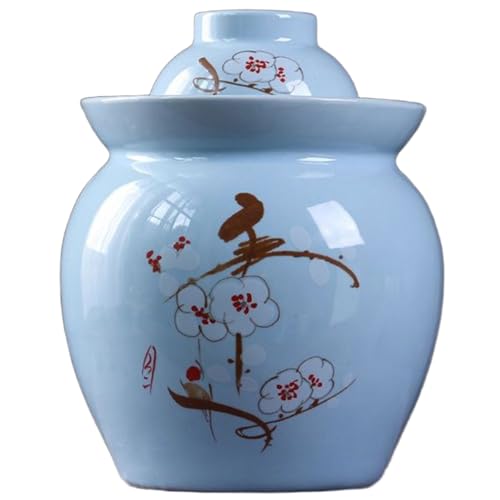
Best Compact Pick – 0.6L Blue Water-Seal Crock
For fermentation crocks for small kitchens, this 0.6-liter stoneware crock offers a compact way to make small batches of sauerkraut, pickles, kimchi, and other fermented vegetables. Its water-seal lid is designed to let gases escape while keeping outside air out, and the blue Chinoiserie-inspired design can fit neatly into a countertop setup.
Best For: Small-batch fermenters with limited counter or storage space.
Pros:
- Compact 0.6-liter capacity suits modest batches.
- Waterlock seal supports an oxygen-reduced fermentation environment.
- Stoneware construction is described as waterproof and durable.
- Wide seal reduces the need for frequent refilling.
Cons:
- Its small capacity is not suited to large harvests or multi-jar batches.
- The decorative square design may be less practical for users prioritizing maximum capacity.
This is the most space-conscious option in the group. Choose it when easy countertop storage and small test batches matter more than preparing several jars at once.
Best Mid-Size Value – 2L Glazed Stoneware Crock
This 2-liter fermentation crock gives small kitchens more working capacity without moving to the largest vessel in the lineup. The glazed ceramic pot includes stone weights and a lid, while its water seal is designed to allow fermentation gases to escape and help prevent outside air from entering.
Best For: Home fermenters who want a versatile vessel for sauerkraut, kimchi, pickles, vegetables, or kombucha.
Pros:
- 2-liter capacity balances batch size with a relatively manageable footprint.
- Includes stone weights and a lid for the fermentation setup.
- Glazed, non-porous ceramic is described as resistant to absorbing unwanted smells or tastes.
- Smooth interior and a reasonably designed mouth make hand washing easier.
Cons:
- At 5.48 pounds, it is heavier than a small glass jar when full or being moved.
- The supplied dimensions still require dedicated storage space in a compact kitchen.
For shoppers seeking fermentation crocks for small kitchens, this is a practical middle ground: larger and more capable than a mini crock, but less imposing than the one-gallon model.
Best for Larger Batches – 1-Gallon Crock with Tamper
This 3.8-liter, one-gallon crock is the largest option here and is intended for bigger batches of sauerkraut, kimchi, pickles, vegetables, or kombucha. It includes stone weights, a lid, and a pickle tamper, but its larger dimensions and 7.39-pound weight make it better for kitchens with a dedicated storage spot.
Best For: Households that ferment several cabbages or want to produce multiple jars from one batch.
Pros:
- 3.8-liter capacity is listed as suitable for two to five cabbages and about four mason jars of sauerkraut.
- Includes stone weights, lid, and pickle tamper.
- Water-seal design allows gases to escape while helping keep outside air out.
- Lead- and cadmium-free glazed ceramic surface is smooth and easier to wash.
Cons:
- Its 7.39-pound weight and larger dimensions are less convenient for very small kitchens.
- Large capacity may be excessive for occasional or single-jar fermenters.
Although it is less compact than the other choices, this crock makes sense when batch efficiency is the priority. Measure your storage area first, then choose it if the extra capacity will be used regularly.
How We Picked the Best Fermentation Crocks for Small Kitchens
We focused on capacity, footprint, sealing design, included weights, material, and everyday usability. The selections range from roughly 1.5-liter containers to one-gallon stoneware crocks, giving you options for single batches, regular meal prep, or larger vegetable ferments. We also considered whether each design appears suited to countertop use, storage, and straightforward cleaning.
Because product configurations can vary, confirm the listing details before buying—especially whether weights, lids, airlocks, or replacement parts are included.
Quick Comparison
| Best For | Recommended Style | Typical Capacity | Main Advantage |
|---|---|---|---|
| Very limited counter space | Glass jar or compact 1.5–1.7L crock | About 0.4–0.45 gallon | Small footprint and easy batch control |
| Traditional vegetable fermentation | Stoneware crock with weights | 2–3 liters | Durable, stable vessel for repeated use |
| Low-oxygen fermentation | Water-seal or inner-lid design | 1.5–3 liters | Helps limit air exposure during fermentation |
| Meal-prep-sized batches | Half-gallon or one-gallon glazed crock | 2–3.8 liters | More room for larger vegetable batches |
Key Buying Factors for Fermentation Crocks for Small Kitchens
Capacity and Footprint
Choose the smallest size that fits your normal batch. A 1.5- to 1.7-liter vessel is easier to store and can be ideal for experimenting. A 2- or 3-liter crock offers more flexibility without taking up as much room as a full gallon. Measure both the base and the lid height if it will live beneath cabinets.
Seal and Lid Design
Water-seal airlock crocks are designed to let fermentation gases escape while reducing outside-air contact. Inner vacuum lids and similar covered containers can also help manage exposure, but they may have different cleaning and pressure-management requirements. Follow the manufacturer’s instructions rather than tightening or modifying the lid during active fermentation.
Weights and Usable Interior Space
Vegetables should remain submerged in brine. Included ceramic weights are convenient, but check their diameter and whether they leave enough room for packing. If weights are not included, make sure compatible food-safe weights are available before purchasing.
Material and Cleanup
Glazed stoneware is sturdy and resists absorbing odors when properly finished, though it is heavy and can chip if dropped. Glass makes it easier to monitor the contents and is often simple to clean, but it offers less protection from light and may be more vulnerable to impact. Look for wide openings and removable components that make washing practical in a small sink.
Who Should Buy Which Fermentation Crocks for Small Kitchens?
Choose a compact 1.5- or 1.7-liter container if you are new to fermentation, have limited storage, or prefer small batches. Pick a 2- or 3-liter stoneware crock if you regularly prepare sauerkraut, kimchi, or pickled vegetables and want a reusable vessel with more working room. A 3.8-liter crock makes sense for frequent fermenters or households that consume larger quantities, provided you have a suitable storage location.
For the easiest visual monitoring, consider glass. For a more traditional setup, choose a glazed stoneware crock with weights. If minimizing air exposure is your priority, compare water-seal and inner-lid designs carefully, paying close attention to cleaning instructions, included accessories, and the space needed to operate the lid.