Finding reliable pressure canners for small kitchens means balancing safe pressure control and usable capacity against limited cabinet, counter, and storage space. The best choice depends on your cooktop, batch size, and whether you want manual stovetop control or electric convenience.
This roundup compares compact cookers and canners with larger models that may still suit occasional use when stored efficiently. Before buying, confirm the manufacturer’s canning instructions and whether the appliance is approved for the foods and methods you plan to use.
Best 10 Pressure Canners for Small Kitchens Picks for 2026
Compact Stovetop Pick
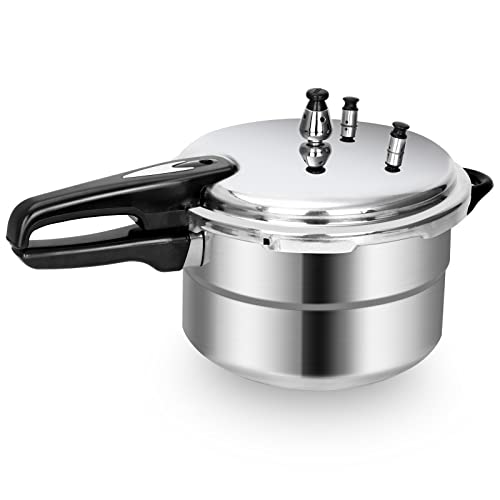
- 10 PSI stovetop pressure cooking and canning
- Induction, gas, electric, and ceramic compatible
- Triple safety system with included rack
Best For: Small kitchens and small-batch cooking
Programmable Canning Choice
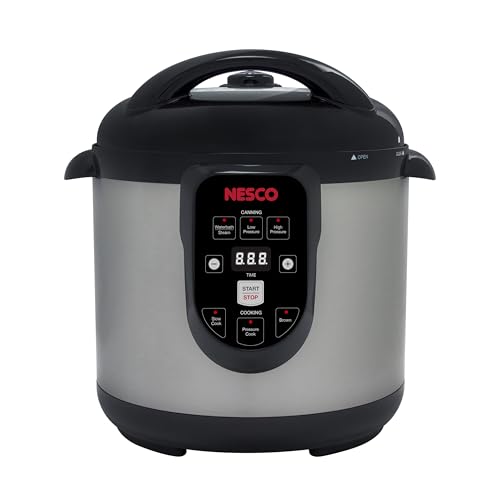
- Automatic pressure and temperature regulation
- 9.5-quart capacity with canning and steam racks
- Digital presets plus slow-cook and water-bath modes
Best For: Convenience-focused home canners
Small-Batch Value
DOITOOL 4.2-Quart Pressure Cooker

- Compact capacity for moderate household meals
- Compatible with induction, gas, and electric ranges
- Triple-safety construction with locking lid
Best For: Everyday cooking in compact kitchens
Ultra-Compact Stainless Pick
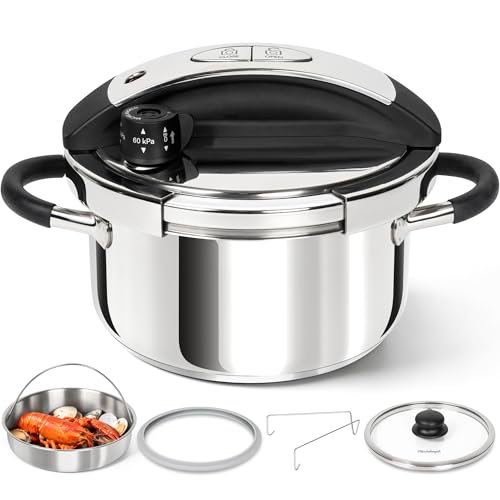
- 3.2-quart capacity for one to three people
- Two pressure levels: 9 PSI and 15 PSI
- Stainless steel, multi-use design with spare gasket
Best For: Singles and couples with minimal storage space
Large-Batch Preserver
T-fal 22-Quart Pressure Canner

- Pressure and water-bath canning in one pot
- Holds up to seven quart jars per batch
- Includes racks, guide, gauge, and safety features
Best For: Large seasonal canning batches
Compact Induction Pick
WantJoin 4.2-Quart Pressure Cooker

- Compact size for two- to three-person meals
- Compatible with induction, gas, and ceramic stoves
- Offers three pressure settings and steaming accessories
Best For: Small-space everyday pressure cooking
Everyday Mid-Size Cooker
Barton 8-Quart Pressure Cooker
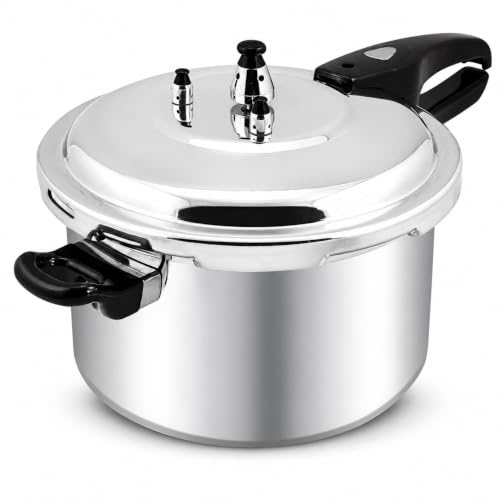
- Eight-quart capacity for family-sized meals
- Lightweight aluminum body with locking lid
- Useful for cooking and occasional smaller canning tasks
Best For: Everyday stovetop meals and limited canning
Compact Stainless Pick
6-Quart WantJoin Pressure Cooker
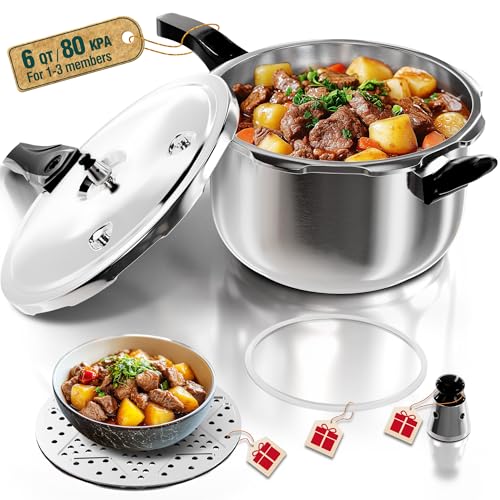
- 6-quart stainless steel construction
- Works on gas and induction cookers
- Spring valve safety system
Best For: Small-batch stovetop cooking in compact kitchens
Large-Batch Classic
Presto 16-Quart Aluminum Canner

- 16-quart high-capacity design
- Warp-resistant aluminum body
- Includes air vent and cover lock
Best For: Larger home canning and cooking batches
Small-Capacity Aluminum Option
Fockety 3.75-Liter Pressure Cooker

- Compact aluminum alloy design
- Works on gas and electric stoves
- Locking lid for everyday cooking
Best For: Small-batch stovetop cooking with limited storage space
Compact Stovetop Pick – 5.3-Quart Pressure Canner
For shoppers comparing pressure canners for small kitchens, this 5.3-quart stovetop model balances a compact footprint with everyday cooking and small-batch canning. Its 10 PSI operation, induction-compatible base, and manual design suit cooks who prefer direct burner control without electronic components.
Best For: Couples, small families, and apartment kitchens needing a versatile stovetop cooker and canner.
Pros:
- Compact 5.3-quart capacity for daily meals and small-batch canning.
- Compatible with gas, electric, ceramic, and induction cooktops.
- Triple safety system includes a pressure regulator, safety valve, and self-locking lid.
- Includes a rack for steaming and canning.
Cons:
- Manual stovetop operation requires monitoring burner heat and pressure.
- Its smaller capacity may not suit large preservation batches.
This is a practical space-saving choice when you want one durable appliance for pressure cooking and occasional canning. The lack of electronics may appeal to buyers prioritizing straightforward maintenance and long-term reliability.
Programmable Canning Choice – NESCO NPC-9 Electric Canner
Among pressure canners for small kitchens, the NESCO NPC-9 is the most automated option in this group. Its digital controls regulate pressure and temperature, while multiple cooking modes let it handle preservation, steaming, slow cooking, water-bath tasks, and everyday meals.
Best For: Home canners who want preset programs, automatic regulation, and a larger batch capacity.
Pros:
- Automatic pressure and temperature regulation reduces stovetop guesswork.
- Digital display, preset programs, and timer support repeatable cycles.
- 9.5-quart capacity with canning and steam racks accommodates multiple jars.
- Removable inner pot and condensation catcher simplify cleanup.
Cons:
- At 22 pounds and over 16 inches tall, it takes more storage space than the stovetop models.
- Its digital operation depends on electrical power.
The NPC-9 makes the strongest case for convenience, especially if you value guided operation and consistent batch processing. Measure your available counter and storage space carefully before choosing this larger electric design for a small kitchen.
Small-Batch Value – DOITOOL 4.2-Quart Pressure Cooker
This 4.2-quart DOITOOL is a compact option for shoppers seeking pressure canners for small kitchens, particularly when fast stovetop cooking matters most. The aluminum pot is designed for moderate meals and lists compatibility with induction cookers, gas stoves, and electric ranges.
Best For: Small households preparing beans, soups, chili, poultry, and other moderate-sized meals.
Pros:
- Space-conscious 4.2-quart capacity for meals serving roughly three to five people.
- Induction, gas, and electric-range compatibility.
- Triple-safety design with regulator, safety valves, and locking lid.
- Aluminum construction supports rapid, even heating.
Cons:
- The supplied information emphasizes pressure cooking more than detailed canning specifications.
- Manual operation requires direct stovetop control.
Choose this model when compact dimensions and quick everyday cooking are higher priorities than large preservation batches. Buyers specifically focused on pressure canning should verify that its intended pressure and capacity match their recipes and preservation requirements.
Ultra-Compact Stainless Pick – MICHELANGELO 3.2-Quart Cooker
For very limited counter and storage space, the MICHELANGELO 3.2-quart cooker is one of the smallest pressure canners for small kitchens in this roundup. It offers two pressure levels, a stainless steel body, and multiple cooking configurations for one to three people.
Best For: Singles, couples, and experienced stovetop cooks who need a small multi-use pot.
Pros:
- 3.2-quart size is suited to one-to-three-person households.
- 9 PSI and 15 PSI settings support different foods and cooking needs.
- Stainless steel body with a 7mm tri-ply base works across gas, electric, ceramic, glass, and induction cooktops.
- Includes glass lid, steamer basket, stand, and spare gasket.
Cons:
- Small capacity is not intended for large meal or canning batches.
- Manual pressure control may require more hands-on attention than an electric model.
This is a strong fit when minimal size, durable stainless steel, and cooking versatility matter more than batch volume. Its supplied features center on pressure cooking, steaming, and stockpot use, so dedicated canners should confirm suitability for their preservation plans.
Large-Batch Preserver – T-fal 22-Quart Pressure Canner
For shoppers comparing pressure canners for small kitchens, the T-fal 22-quart model is best suited to households that can in large batches and have room for a substantial stovetop appliance. Its aluminum construction supports both pressure and water-bath canning, while the included racks and guide make it easier to get started.
Best For: Large seasonal batches of vegetables, meats, seafood, fruits, jams, and pickles.
Pros:
- Supports both pressure canning and boiling-water canning.
- Large capacity holds up to seven quart jars or 18 pint jars per batch.
- Includes two racks, a canning guide, a locking lid, steam release valve, and gauge.
- Compatible with gas and electric coil cooktops.
Cons:
- Its 22-quart capacity and roughly 19.33-inch diameter require considerable storage and stovetop space.
- At 14.8 pounds, it is less convenient to move than smaller models.
- It is not listed as induction compatible.
This is a capable choice when batch size matters more than compact storage. For a genuinely small kitchen, measure your cooktop and cabinet space first; otherwise, its capacity and included accessories make it a practical all-in-one canning setup.
Compact Induction Pick – WantJoin 4.2-Quart Pressure Cooker
Among pressure canners for small kitchens, the WantJoin 4.2-quart cooker stands out for its compact size and induction compatibility. It is primarily a pressure cooker, steamer, and soup or sauce pot for smaller meals, with three pressure settings and a rack or basket for steaming.
Best For: Two- to three-person meals, weekday pressure cooking, steaming, and compact induction setups.
Pros:
- Compact 4.2-quart capacity fits smaller meal-preparation needs.
- Works on induction, ceramic, gas, and butane stoves.
- Three adjustable pressure settings offer cooking flexibility.
- Includes a steamer basket and tempered glass lid.
Cons:
- Its smaller capacity is not intended for large canning batches.
- The supplied notes do not specify a USDA pressure-canning capacity or canning guide.
- Its primary design is pressure cooking, steaming, and simmering rather than dedicated home canning.
This is the most space-conscious option of the three, especially for cooks who need an everyday pressure cooker that can work on induction. Consider it a compact cooking tool with limited batch-canning usefulness rather than a full-size canner.
Everyday Mid-Size Cooker – Barton 8-Quart Pressure Cooker
The Barton 8-quart model offers a middle ground for shoppers considering pressure canners for small kitchens. Its aluminum body is lighter than the T-fal, while the 8-quart capacity gives you room for family-sized meals, beans, meats, soups, and some home-canning tasks without moving to a full 22-quart canner.
Best For: Everyday stovetop cooking, larger family meals, and occasional home-canning use on gas cooktops.
Pros:
- Eight-quart capacity suits family-sized meals and meal preparation.
- Lightweight 5.5-pound aluminum construction is easier to handle.
- Pressure release valve and secure locking lid support controlled operation.
- Efficient for soups, stews, beans, vegetables, meats, and rice.
Cons:
- Only gas stovetop compatibility is specified in the supplied details.
- It lacks the dedicated racks and canning guide included with the T-fal.
- The 8-quart size offers less batch capacity than a full-size pressure canner.
Choose the Barton when everyday cooking is the priority and you want a lighter, more manageable pot than a large canner. It can support smaller home-canning needs, but its simpler accessory package makes it less specialized for frequent preservation.
Compact Stainless Pick – 6-Quart WantJoin Pressure Cooker
For pressure canners for small kitchens, the 6-quart WantJoin offers a compact stainless steel format with compatibility for gas and induction cooktops. Its manual design and safety-focused spring valve make it a practical option for smaller-batch cooking, though shoppers should confirm that its intended use matches their canning needs.
Best For: Small households wanting a stainless steel pressure cooker for gas or induction stovetops.
Pros:
- 6-quart capacity suits smaller cooking batches.
- Stainless steel construction includes a heat-spreading sandwich bottom.
- Compatible with gas and induction cookers.
- Spring valve provides pressure indication and automatic pressure relief.
Cons:
- Manual operation requires stovetop monitoring.
- Its 6-quart size is less suitable for large canning loads.
The WantJoin stands out when counter and storage space are limited. Its stainless construction and induction compatibility add versatility, while the smaller capacity keeps it more manageable than full-size canners.
Large-Batch Classic – Presto 16-Quart Aluminum Canner
Among pressure canners for small kitchens, the Presto 01755 provides substantial 16-quart capacity in a warp-resistant aluminum body. It is designed for pressure canning and cooking foods such as meats and fish, but its larger footprint may require more storage and stovetop space than compact models.
Best For: Home cooks who need a traditional, high-capacity pressure canner for larger batches.
Pros:
- 16-quart capacity supports larger canning and cooking batches.
- Warp-resistant aluminum construction.
- Designed for canning and cooking meats, fish, jams, and jellies.
- Includes an air vent and cover lock.
Cons:
- Larger dimensions may be challenging in a small kitchen.
- Aluminum construction may not suit shoppers specifically seeking stainless steel.
The Presto is the capacity-focused choice in this group. It can handle more food at once, but buyers with limited cabinets or stovetop space should measure carefully before choosing this full-size canner.
Small-Capacity Aluminum Option – Fockety 3.75-Liter Pressure Cooker
For shoppers comparing pressure canners for small kitchens, the Fockety pressure cooker offers a smaller aluminum format with a listed 3.75-liter capacity. Its locking lid and compatibility with gas and electric stoves make it adaptable for everyday cooking, while the compact capacity is better suited to modest batches.
Best For: Small-batch home cooking on gas or electric stovetops.
Pros:
- Compact 3.75-liter listed capacity for smaller batches.
- Aluminum alloy construction is designed for heat resistance.
- Compatible with gas and electric stoves.
- Locking lid and easy-opening design.
Cons:
- Smaller capacity limits large-batch canning.
- Product specifications list both 3/4 and 5 liters, so capacity should be verified before purchase.
- The supplied details do not identify a specific pressure-canning standard or gauge.
The Fockety is appealing when space and batch size matter most. Its stovetop flexibility and locking lid support convenient cooking, but shoppers should confirm the exact capacity and suitability for their planned canning recipes.
How We Picked These Pressure Canners for Small Kitchens
We selected models across several useful size and operating categories: compact stovetop cookers, mid-size pressure canners, electric canning appliances, and larger pots for buyers who preserve in batches. We considered cooking surface compatibility, stated capacity, construction, pressure controls, safety features, included racks or guides, and how practical each design is to store in a smaller kitchen.
Because product listings can vary by seller and production run, verify the current manual, pressure settings, dimensions, and certification details before purchase. For pressure canning, follow tested recipes and current food-preservation guidance rather than relying on general pressure-cooking instructions.
Quick Comparison
- Smallest footprint: The 3.2-quart and approximately 4.2-quart stovetop models are easiest to store and suit small batches.
- Electric convenience: The NESCO model offers digital controls and a dedicated appliance format, but it still needs counter and storage space.
- Best for larger batches: The Presto 16-quart and T-fal 22-quart models provide more room but require substantially more storage.
- Flexible cooktops: Stainless-steel models advertised as induction compatible are useful if you use both induction and gas.
- Value-focused aluminum options: Aluminum pots are generally lighter and heat quickly, though buyers should check compatibility with their cooktop.
Key Buying Factors for Pressure Canners for Small Kitchens
Capacity and Storage
Choose the smallest capacity that handles your typical batch. A compact pot can be easier to lift, wash, and store, while a larger canner may reduce the number of processing cycles. Measure cabinet height, shelf depth, and the space needed to remove the lid safely.
Cooktop Compatibility
Induction users should look for an explicitly compatible base; aluminum alone is usually not induction-ready unless the product includes a magnetic layer. Gas and electric coil users have more flexibility, but burner size and weight still matter.
Pressure Control and Safety
Look for clearly documented pressure settings, a readable gauge or regulator where applicable, secure locking, pressure-release protection, and an overpressure safety mechanism. Do not buy a model with vague instructions or missing documentation.
Materials and Maintenance
Aluminum is lightweight and economical, while stainless steel is often more durable and better suited to induction when properly constructed. Check whether the sealing ring, valve, rack, and other wear parts are replaceable.
Who Should Buy Which Pressure Canners for Small Kitchens?
Choose a compact stovetop model if storage is your main concern and you preserve small quantities. Choose a stainless-steel induction-compatible model if you need cookware that works across multiple cooktops. Choose the NESCO electric canner if guided controls and a dedicated appliance are more important than minimizing counter space. Choose a 16- or 22-quart canner if you regularly process substantial harvests and have a secure storage location. Whichever model you select, prioritize documented safety features and tested canning procedures over advertised speed or capacity alone.